The Hidden Costs of Operational Tax in Pest Control (and How to Spot Them)
Operational tax is the hidden cost of unnecessary work that builds as your pest...
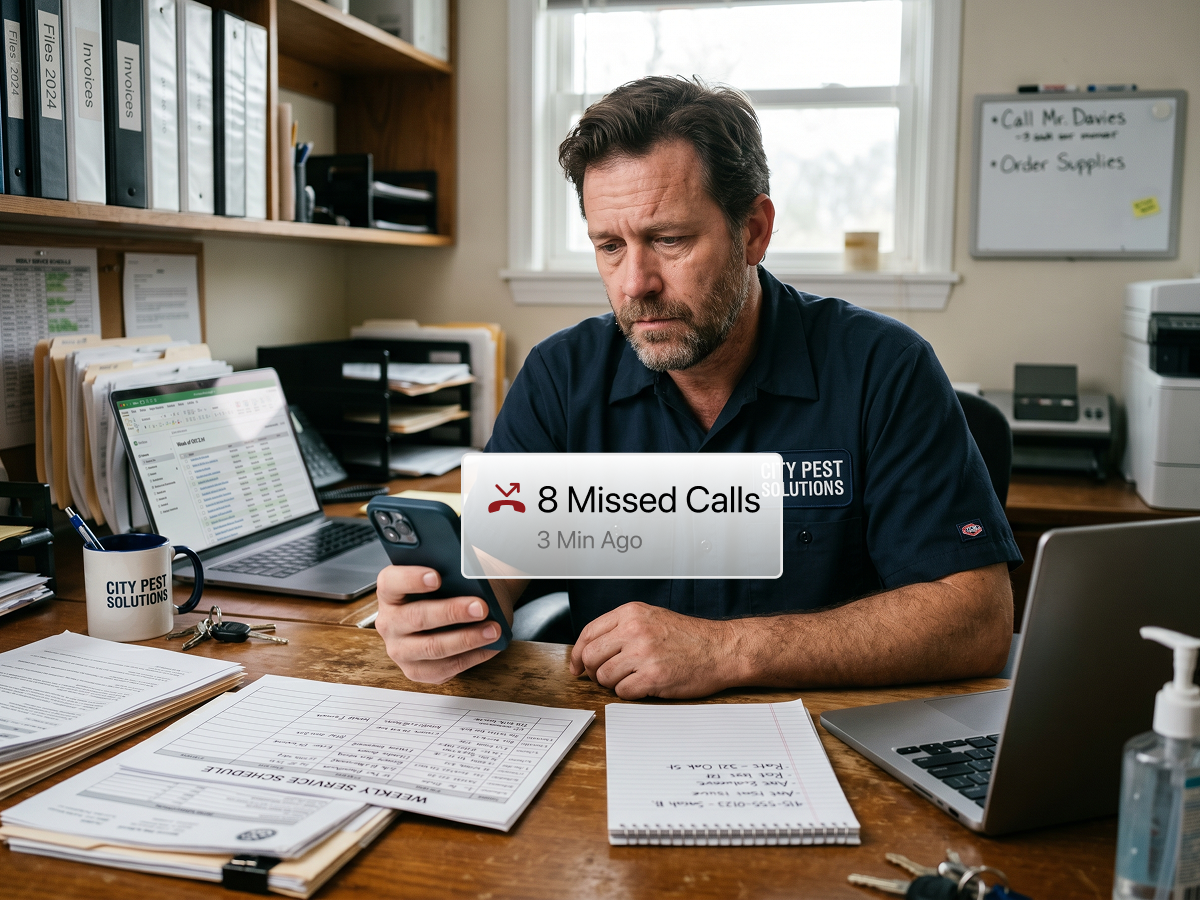
Running a pest control or lawn care company means constantly balancing everything that keeps your business moving.
On any given day, office staff may be coordinating routes, rescheduling appointments, answering billing questions, and communicating with technicians in the field. All while trying to keep up with incoming calls.
During the busy season, that balancing act gets even harder. As call volume increases, it’s easy for quote requests, service inquiries, and customer calls to slip through the cracks.
And most of the time, those potential customers aren’t waiting to call you back later—they’re moving on to the next company on their list.
That means missed revenue, fewer booked jobs, and lost growth opportunities, all from a call that never got answered.
The good news is that missed calls are usually a process problem, not a staffing problem. With the right systems, communication tools, and scheduling workflows, pest control and lawn care companies can drastically reduce missed opportunities and improve responsiveness.
In this guide, we’ll break down the different ways you can reduce missed calls and stop sending potential customers straight to your competitors.
When potential customers can’t reach your business, most won’t wait for a callback. They’ll move on to the next company they find on Google and take their revenue with them.
During your busiest weeks, when unanswered calls pile up fast, that becomes a major (and costly) problem. Especially considering that an average of 41% of home service phone leads become customers—and less than 3% of callers leave a voicemail—those missed calls carry significant revenue potential.
The bottom line? If you miss the call, there’s a good chance you miss out on the customer, too.
Let’s put that into perspective.
Say your office receives 200 inbound calls each month from:
If 24% of those calls go unanswered—the average rate in home services—that’s 48 missed calls every month.
With a 41% conversion rate, about 20 of those callers could have become booked jobs.
If the average recurring pest control or lawn customer brings in about $900 per year, that’s about $18,000 in annual recurring revenue lost from unanswered calls alone.
And the cost isn’t just financial. It affects your customer experience, too.
Most customers calling a pest control or lawn care company need help quickly. A homeowner hearing rats in the attic may want same-day service. A lawn customer trying to schedule a treatment before a backyard event may call multiple companies in an afternoon.
If nobody answers, confidence in your company starts dropping before the relationship even begins.
Busy season only makes the problem worse.
Spring and summer bring higher call volume, weather-related rescheduling, and constant coordination between technicians and office staff. Without a reliable process for handling inbound calls, response times slow down, and you miss more opportunities.
Over time, missed calls can lead to:
Most missed calls happen because office teams are stretched thin during busy periods. Phones ring while staff handles billing questions, route changes, scheduling issues, and customer follow-ups all at once.
The good news is that reducing missed calls usually comes down to improving processes, response systems, and phone coverage rather than simply hiring more staff.
RELATED ARTICLE: 10 Hidden Costs of Manual Processes in Your Lawn Care Business
Reducing missed calls is about building systems that help your team handle high call volume without overwhelming the office.
The right processes can reduce lost leads, shorten callback delays, and create a smoother customer experience, even during the busiest parts of the season.
Here are eight ways pest control and lawn care companies can reduce missed calls and improve customer response times.
An answering service is a third-party team that provides live phone coverage for your company when your office team is tied up with other work.
Instead of going to voicemail, callers speak with a real person who can:
For example, if your office staff spends the morning rescheduling lawn treatments after heavy rain, new sales calls can easily sit unanswered for 20 minutes or longer.
An answering service helps capture those inbound leads immediately and passes the information to your team, allowing office staff to finish urgent scheduling changes without losing potential customers.
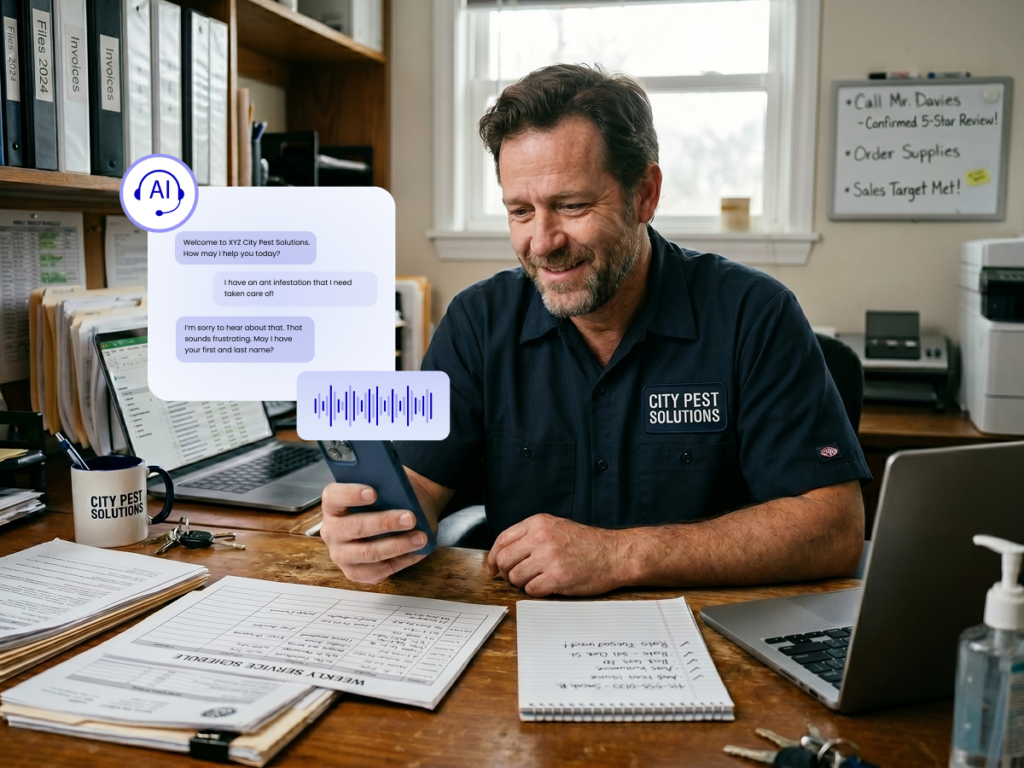
An AI receptionist uses artificial intelligence to answer inbound calls automatically when your team can’t get to the phone.
Unlike voicemail, AI receptionists interact with callers in real time. They can answer common questions, collect customer information, route calls by urgency, and even schedule appointments based on rules your company sets.
That creates faster response times during after-hours periods and busy parts of the day, when office staff is already helping other customers.
For example, a homeowner hearing rodents in the attic at 9 p.m. can still receive an immediate response instead of being sent straight to voicemail.
Depending on the system, AI receptionists can:
While AI receptionists might sound futuristic, they’re quickly becoming a valuable tool for companies across many industries looking to improve responsiveness without adding more office workload.
Many modern pest control and field service platforms are already building AI-powered communication tools directly into their software.
The biggest advantage is speed. Customers receive an immediate response instead of waiting until the next business day for a callback.
Even when your team can’t answer immediately, a fast follow-up text can reassure customers that their call was received and that a response is coming soon.
Many phone systems and field service platforms can automatically send a text message within seconds of a missed call. Here’s an example message:
“Thanks for calling. Our team is currently helping other customers, but we’ll call you back within 15 minutes.”
A message like this helps set expectations, reduces uncertainty, and keeps potential customers engaged while your team catches up.
Without any follow-up, many callers assume nobody is available and move on to another company before you have a chance to respond.
Call routing automatically directs inbound calls to the right person based on the reason the customer is calling.
Instead of sending every call through the same phone line, you can create routing rules for different situations. That reduces transfers, shortens hold times, and helps customers reach the right person faster.
For example:
Call routing also helps reduce unnecessary interruptions for technicians and office staff by making sure calls reach the people best equipped to handle them.
Relying only on voicemail after hours can lead to missed opportunities, especially when customers need quick answers or urgent service.
A better approach gives customers multiple ways to reach your company outside normal office hours.
That might include:
These options make it easier for customers to request estimates, report urgent pest issues, or ask scheduling questions in the evenings and on weekends without waiting for your office to reopen.
Set aside 15 to 20 minutes each week to review missed call logs from your phone system or CRM software.
Write down:
Over time, those patterns can reveal operational bottlenecks that are easy to miss during busy weeks.
For example, you might find:
Insights like these make it easier to improve staffing, phone coverage, and scheduling workflows.
You may realize the office needs extra phone support during lunch hours or that technicians tend to contact the office during the same periods when new sales leads are calling in.
RELATED ARTICLE: Door-to-Door Pest Control Sales Techniques
Some calls take longer than necessary. During peak season, a single 12-minute scheduling call can prevent several new inbound calls from being answered.
Good phone training helps office staff answer questions efficiently, book appointments faster, reduce awkward pauses, and keep conversations moving without making customers feel rushed.
That leads to shorter wait times and gives your team a better chance of answering more incoming calls throughout the day.
Not every customer wants to have to call your office to schedule service. In fact, 82% of customers prefer to book appointments online.
Online booking tools and estimate request forms give customers a faster, more convenient way to contact your company. They also reduce phone volume during busy periods.
This works especially well for lawn care quotes, recurring service signups, and straightforward scheduling requests.
Online booking also helps capture leads after hours, giving customers a way to request service late at night or early in the morning when your office team is unavailable.
RELATED ARTICLE: What to Include in a Lawn Care Estimate (with Downloadable Template)
Pest control and lawn care companies both struggle with missed calls, but the reasons behind those calls—and the risks of missing them—are often very different.
Pest control calls usually involve urgency. Lawn care calls are more often tied to scheduling, pricing, or seasonal planning.
That difference affects how each type of company should approach phone coverage and response times.
Here’s a quick comparison:
| Situation | Pest Control | Lawn Care |
| Why customers call | Active pest problems inside or around the home | Quotes, recurring treatments, or lawn concerns |
| Customer urgency | High urgency after finding pests | Lower urgency but faster comparison shopping |
| Common call timing | Nights, weekends, and after pest sightings | Lunch breaks, evenings, and weekends |
| Risk of missed calls | Customer calls another company immediately | Customer requests quotes from several companies |
| Best response setup | After-hours coverage and fast callbacks | Fast estimates and easy scheduling |
| Common office challenge | Handling urgent service requests | Managing route changes and seasonal call volume |
For example, a homeowner who discovers a wasp nest near the front door typically wants immediate reassurance that someone can help. Waiting until the next day to respond may cost you the job entirely.
Lawn care customers usually approach the decision differently. Many contact several companies for pricing in the same afternoon, which means slow response times can quickly push your estimate lower on their list.
That’s why the best call-handling strategy depends on the type of service your company provides, and the expectations customers bring with it.
RELATED ARTICLE: How to Sell Lawn Care Services
A missed call audit helps you identify where leads fall through the cracks, how quickly your team responds, and which situations create the most phone coverage problems.
The goal is to identify the issues preventing customers from reaching your team and to improve them over time.
Here’s a straightforward process you can follow for your audits:
Pull the last 14 to 30 days of missed call data from your phone system or CRM.
Look for trends such as peak missed-call hours, busiest call days, after-hours activity, and long callback delays.
Review whether missed callers received a callback, text message, or estimate follow-up afterward.
Spot issues like long hold times, rushed conversations, poor handoffs, or missed opportunities to book service.
Organize issues into categories, such as:
Add phone coverage during busy periods, shorten callback expectations, improve routing rules, or assign sales calls to a specific team member.
Monitor numbers like missed call volume, callback speed, same-day callback rate, and booked jobs from phone leads to measure improvement over time.
For many pest control and lawn care companies, growth problems don’t start with marketing—they start with unanswered phones.
You can invest in ads, referrals, SEO, and route density all day long, but none of it matters if potential customers can’t reach your team when they’re ready to book service.
The companies that consistently win more recurring customers are usually the ones that make responsiveness part of their operation, not just an office task.
That doesn’t mean your team needs to answer every call instantly. But it does mean customers should feel like your company is reachable, organized, and ready to help when they contact you.
Because in pest control and lawn care, the customer experience often starts before anyone ever steps onto the property.
RELATED ARTICLE: How to Grow a Pest Control Business
Operational tax is the hidden cost of unnecessary work that builds as your pest...
Use our free pest control receipt template to document completed services, confirm payments, and...
Download our free pest control overdue notice template kit and learn how to send...