22 Social Media Post Ideas for Pest Control Companies
Discover how to use social media to grow your pest control business. Learn practical...
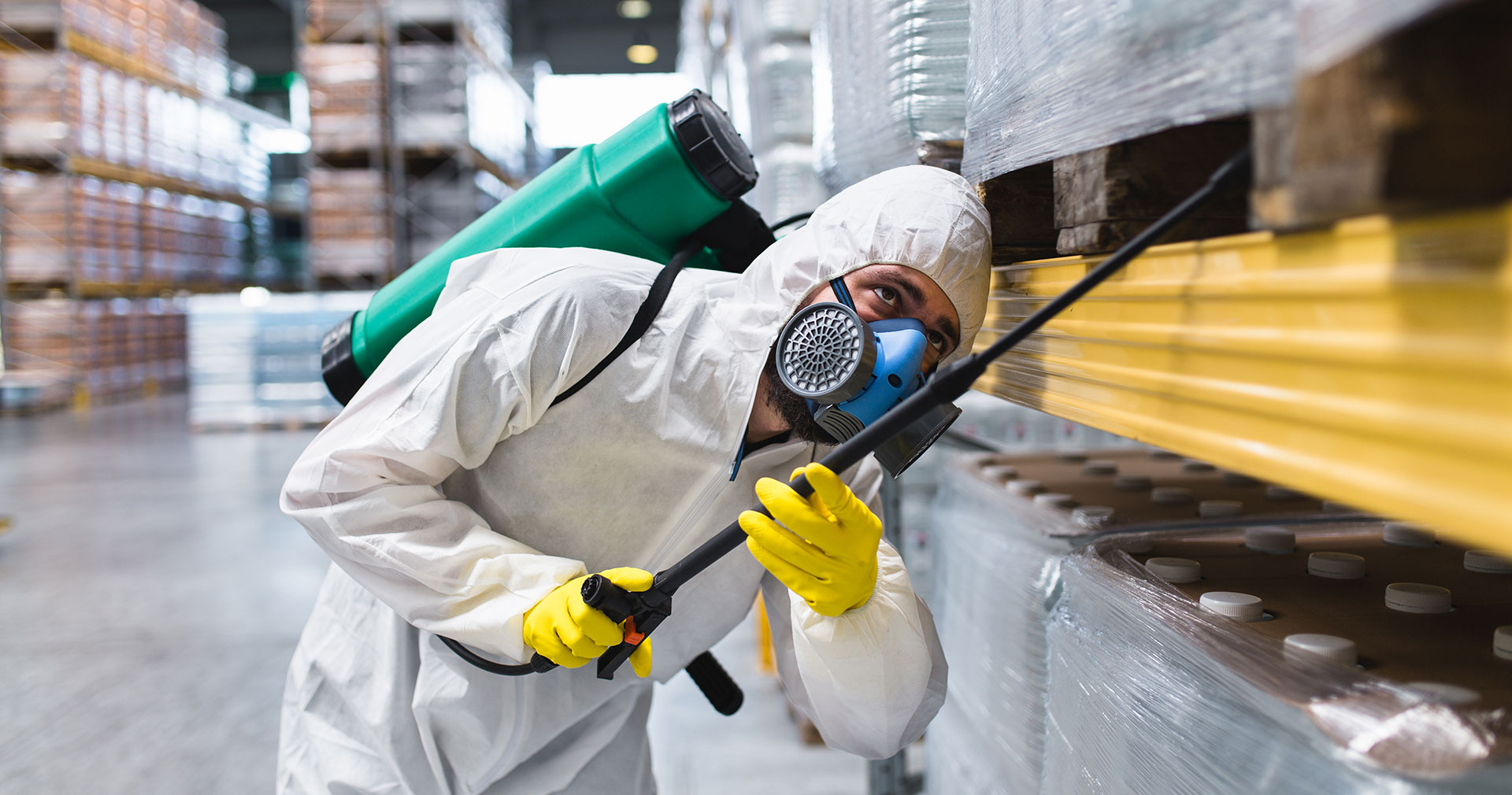
When it comes to pest control, there’s no shortage of methods for pros to use. Sometimes, it can even feel like there are more ways to control pests than there are pests to control.
From sprays to spores to sticky traps, the options are diverse, and not every method fits every job. Knowing what to use and when—and being able to track it all clearly for your team and your clients—can help you succeed.
Especially in an industry that’s constantly evolving with new methods and technology, it’s important to stay informed.
So, let’s walk through the main types of pest control methods in use today that business owners, technicians, and other pest pros should be familiar with. From chemical and biological to natural methods and more, we’ll break it all down for you.
Let’s get started.
RELATED ARTICLE: The 9 Latest Trends in Pest Control Technology
If there’s one universal truth about pest control, it’s that no two days look alike. It’s a job for problem-solvers. And what’s one of the first steps to solving a pest problem? Understanding every tool at your disposal.
These are the effective pest control techniques you need to know about.
This method is exactly what it sounds like—removing, blocking, trapping, or killing pests using direct, hands-on action. Stepped on a spider with your shoe? That’s physical pest control.
In situations suited to physical pest control techniques, you can change the environment to reduce or eliminate pests. No chemical formulas are involved, and there’s no need to wait for residual effects. The results are immediate and visible.
You can approach physical pest control in a couple of ways. Here are some of the most common:
Physical methods are sometimes the first line of control before introducing chemical or biological options.
Let’s take a look at some use cases.
Let’s say there’s a homeowner in a two-story colonial. They call in with ants trailing along the kitchen baseboard.
Inspection reveals an entry point through a foundation crack behind a garden bed. You seal the crack with caulk, place baited traps along the trail, and clean up visible ants.
A warehouse near a food distribution center reports rodent activity near the loading dock. You install snap traps inside bait stations along the exterior and seal a wall opening using mesh and steel wool.
Weekly follow-up visits include resetting traps and photo documentation. This approach satisfies both pest control requirements and third-party audit standards—it’s a win-win.
Is physical pest control a good option? The answer depends.
It can be advantageous in certain situations, such as:
It also comes with some drawbacks, like:
The bottom line? Physical pest control provides critical foundational experience for new technicians. It teaches you to observe how pests behave, where they travel, and how structural weaknesses allow them in.
Mastery of these basics improves judgment in every service call that follows.
RELATED ARTICLE: 9 Pest Control Sales Tips to Boost Your Business
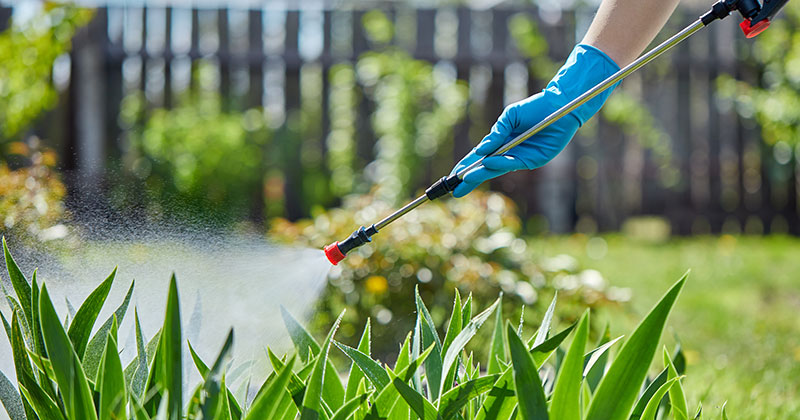
Sometimes, you have to outnumber, outsmart, or outbreed the pest. That’s the idea behind biological pest control.
This method uses other living organisms to bring pest populations down. In other words, it’s a controlled release of natural pest predators or competitors.
Think of it like setting up a natural chain reaction. When you choose and apply the right agent under the right conditions, biology does the heavy lifting for you.
Common techniques include:
Always check the conditions—temperature, humidity, and light exposure—before releasing any predatory pests. Biological control works best when pest numbers are growing, not when they’ve exploded.
Here are two use cases:
A homeowner reports aphids clustering on potted citrus trees. You confirm active feeding and release lady beetles near the base of the trees in the evening.
You advise light misting to help the beetles stay hydrated and encourage them to settle. By week two, aphid numbers drop, and the leaves become healthy again.
In a small greenhouse operation, thrips are damaging ornamental cuttings. You introduce Amblyseius cucumeris, a predatory mite that targets thrip larvae. You also install sticky cards to monitor progress.
The grower sees reduced feeding damage within 10 days.
Biological approaches can be some of the best types of pest control methods. Pros include:
But it has its cons, too:
Microbial pest control is a method in which you apply a living microbe that makes pests sick. It works like a biological control but comes packaged more like a traditional pesticide in a spray, drench, or powder.
Microbial agents can include bacteria, fungi, viruses, or protozoa. Each agent infects a specific pest. They’re useful because they leave beneficial insects and humans alone, so you don’t get broad-spectrum wipeout.
Some of the more common microbial strategies include:
If you purchase a microbial pest control agent, read the label carefully for temperature range, shelf life, and pH sensitivity.
If you apply it wrong, it won’t do anything. But if you check all the boxes, it can be extremely effective. Just take a look at these use cases.
A backyard gardener finds cabbage loopers eating through kale. You inspect and recommend Bt kurstaki.
The gardener sprays in the late afternoon. The next day, larvae are still visible, but feeding has stopped. Within three days, the leaves are clean and the pests are gone.
A mushroom farm says they have rising numbers of fungus gnats. Adult flies hover near substrate trays, and larvae feed on the growing medium.
You add Bti (a Bt strain) to the irrigation cycle. The larvae ingest the bacteria and die mid-stage. Within 10 days, adult counts fall and production stabilizes.
The benefits?
And the potential downfalls:
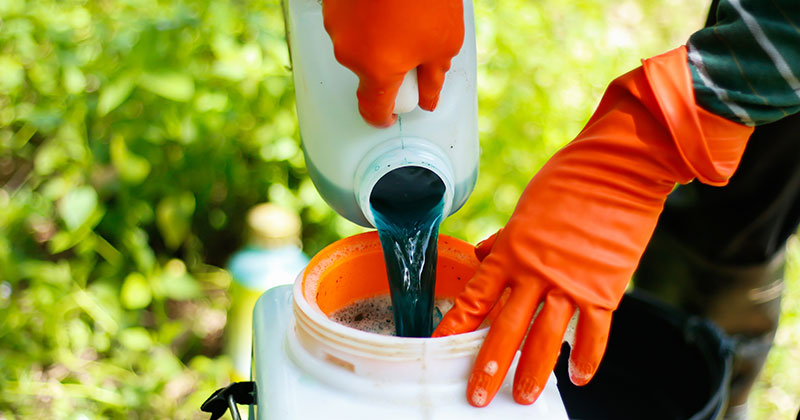
Did you know that the world has been spraying pests longer than it’s been writing about them? Sulfur was already killing mites in Mesopotamia while stone tablets were still drying in the sun. Later, we moved on to arsenic and lead.
Today, the methods are more refined, but the idea of chemical pest control hasn’t changed a bit.
It works like this:
Chemical pest control relies on synthetic compounds. These can target insects, weeds, fungi, rodents, and anything else classified as a pest. Most chemicals disrupt the pest’s biological systems, such as digestion, nerves, and reproduction. Some kill on contact, others after ingestion.
Chemicals can come in various forms as well. For example, some are sprays or powders, and others are gases or gels.
Often-used techniques include:
Always read the label and follow dilution instructions exactly when working with chemical pest control materials.
Track reentry intervals, wear protective gear, and store unused products safely. Even a mild chemical can cause damage if applied incorrectly.
Let’s see how these chemicals work in practice.
Say a homeowner finds a trail of ants entering through a back wall.
You trace the trail to a soil gap and apply a non-repellent insecticide around the foundation perimeter. Then, you follow with a gel bait indoors.
A food processing plant reports stored product beetles near the grain silo.
After-hours, you conduct a space fog treatment with an aerosol. After ventilation, you apply an insect growth regulator (IGR) to shelves and corners.
Monitoring traps confirm knockdown within 48 hours.
Chemical pest control methods can be highly effective. Here’s why:
Of course, no technique is perfect. Cons include:
RELATED ARTICLE: The Best Pest Control Equipment to Build Your Business
What if you didn’t have to spray chemical, microbial, or other pest control agents at all? What if you could drive pests away using what’s already in nature?
That’s the principle behind natural pest control.
Natural pest control uses physical, botanical, or mechanical methods to manage pests without synthetic chemicals. These solutions usually work by repelling pests or making environments less attractive.
Some techniques and products include:
Natural methods aren’t always strong enough to stop a major infestation. But they’re ideal for prevention or low-pressure sites.
They’re often used in sensitive spaces like homes with pets or kids. They can also be great for organic farms or areas with water runoff concerns, too. Let’s review some use cases.
A gardener finds spider mites on their indoor plants. You apply a neem oil and water mix using a handheld sprayer. Then, you suggest wiping leaves weekly and increasing humidity.
The mites reduce steadily without chemical use.
A yoga studio reports fruit flies near the kitchen sink.
You set out vinegar traps and clean the drain with a baking soda flush. You also apply diatomaceous earth behind the appliances to discourage further breeding.
The problem can be resolved without introducing any toxic agents into the space.
There are many reasons why your clients might prefer to go the natural route, like:
Despite these benefits, there are some disadvantages to be aware of, such as:
RELATED ARTICLE: How to Write a Pest Control Business Plan

You spray once. The ants disappear. A week later, they’re back—and they’re not alone.
Sound familiar? Integrated Pest Management (IPM) could be the solution.
According to the Environmental Protection Agency, Integrated Pest Management is “an effective and environmentally sensitive approach to pest management that relies on a combination of common-sense practices. IPM programs use current, comprehensive information on the life cycles of pests and their interaction with the environment.”
In other words, IPM is a systems-based approach. It solves pest problems by combining methods instead of relying on one. It also uses facts about pests and how they reproduce to make pest control more effective.
IPM can lead to fewer callbacks, more stable control, and longer-lasting results.
Like other pest control methods, IPM starts with a thorough inspection. You must look around the property carefully to diagnose the issue and its cause.
Then, choose the least risky and most effective option available. You might layer multiple methods.
Finally, you follow up and make changes based on what’s happening at the site.
Let’s say you’re dealing with German cockroaches in an apartment kitchen.
You:
You’ve now combined mechanical, chemical, and educational tactics to reduce the population and avoid resistance buildup.
Monitoring and action thresholds are also fundamental elements of the IPM process.
Monitoring is, of course, the process of observing the results of the tactics you use. For example, you can monitor by setting traps, inspecting high-risk areas, or logging sightings. Then, you’ll use what you find to decide what happens next (i.e., whether to alter the treatment course and how).
A threshold is the level of pest activity and/or damage that triggers the need for treatment. One ant outside? No problem. Ants streaming from a baseboard? Time to act.
IPM doesn’t aim for zero pests everywhere—it aims for zero problems. You act when the pest becomes a risk to health, structure, or comfort.
Here’s how IPM stacks up against quick fixes:
| IPM | Quick fixes | |
| Approach | Planned, layered, based on inspection | Reactive, often chemical-only |
| Outcome | Long-term control, fewer re-treatments | Short-term knockdown, rebound common |
| Chemical use | Minimized and targeted | Frequent and broad |
| Customer satisfaction | Higher, thanks to fewer repeat problems and a clear process | Lower, as pests may return or change locations |
| Resistance risk | Reduced as methods rotate and alternate | Higher—pests adapt to overused products |
RELATED ARTICLE: How to Start a Pest Control Business
Now that you know the top pest control methods today, it’s time to go out there and use them. So, what can you do to position your pest control business for a bright and successful future?
Here are a few simple next steps to start with:
Looking to step up your business? Schedule a demo with our suite of pest control business management software and see what the buzz is all about!

Discover how to use social media to grow your pest control business. Learn practical...

Learn what every lawn care estimate should include and get a free template to...

Use our lawn care contract template and tips to create and send contracts faster,...