The Hidden Costs of Operational Tax in Pest Control (and How to Spot Them)
Operational tax is the hidden cost of unnecessary work that builds as your pest...
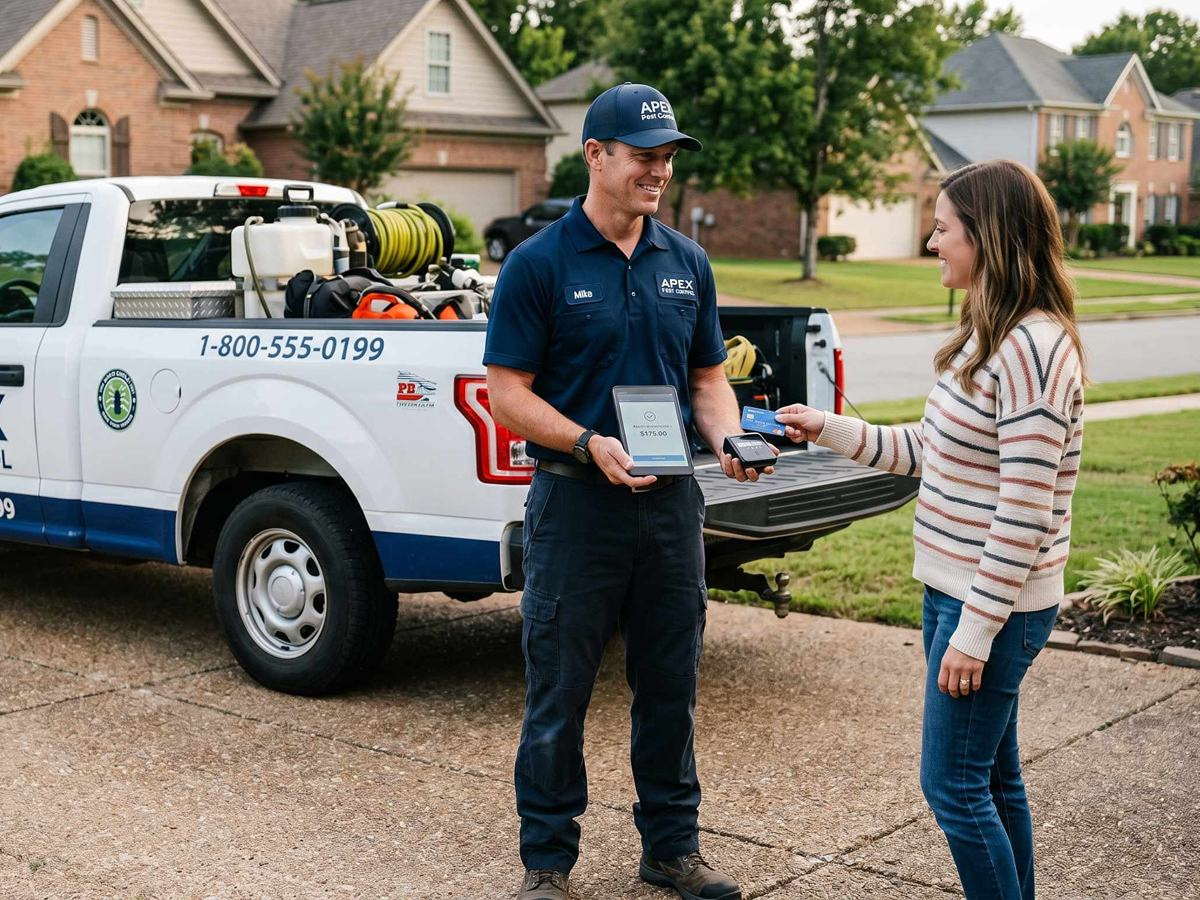
Getting paid quickly is crucial for any small business, especially in pest control. Delayed invoices, overdue balances, and manual follow-up calls can slow cash flow and create extra work for your office team every week.
And when you’re a growing company, those problems add up fast.
Your team finishes the work, but invoices don’t go out until days later. Customers forget to pay. Office staff spends hours tracking down overdue balances instead of helping customers or supporting technicians in the field.
Over time, inconsistent payment collection creates more than accounting headaches. It makes cash flow harder to predict, increases administrative workload, and slows down day-to-day operations.
The good news is that small billing improvements can make a major difference.
Habits like sending invoices immediately after service, offering auto-pay for recurring plans, and automating reminders can help pest control companies collect payments faster and reduce office admin at the same time.
In this guide, we’ll break down practical ways to improve your pest control billing process, strengthen cash flow, and create a smoother payment experience for both your team and your customers.
You can collect payments faster by:
Cash flow disruptions affect 88% of small businesses in the U.S. The pest control industry is no exception.
In many cases, the issue is not that customers are unwilling to pay, but that the billing process creates too much friction.
Invoices get delayed. Follow-ups happen manually. Customers miss due dates. Recurring billing creates extra office work. Small gaps in the process, like these, slowly turn into overdue balances and inconsistent cash flow.
Some of the biggest causes include:
For example, a technician might complete several jobs in one day, but invoices don’t go out until days later. By then, the invoice is more likely to get buried under your customer’s other bills and priorities.
Over time, slow payment collection creates more work for your office team and makes revenue harder to predict from month to month.
RELATED ARTICLE: How to Grow a Pest Control Business
Getting paid faster starts with a billing process that’s clear, simple, and easy for customers to use.
The good news is that small changes can make a noticeable difference. Faster invoicing, automated payments, and clearer billing systems can help customers pay sooner while making life easier for your office team.
Here are five proven ways to speed up your pest control payment process and reduce overdue invoices.
Pest control customers are much more likely to pay on time when they understand exactly when payment is due and how to pay.
Problems usually start when expectations are unclear. For example, your team may expect payment after each service visit, while the customer assumes the bill will come later at the end of the month.
That small misunderstanding can delay payment for days or even weeks.
Clear payment terms help prevent that confusion before the work even begins. These are short billing instructions that explain how your payment process works and what customers should expect.
You can include payment terms on:
Your payment terms should explain:
Setting expectations early creates a smoother payment process for everyone involved. It also reduces billing questions, overdue balances, and awkward payment conversations after the job is complete.
The longer it takes to send an invoice, the longer it usually takes to get paid. That’s why fast invoicing is so important in pest control.
When customers receive the invoice right after service, the visit still feels recent. Payment feels connected to the completed job instead of something they need to deal with days later.
Wait too long, and the invoice can easily get lost or forgotten due to other bills, emails, and daily distractions.
Fast invoicing also reduces extra work for your office team. When customers pay right away, it means fewer reminder calls and overdue balances to track down later.
You can make the process even smoother by attaching your pest control inspection report to the invoice. That way, your customers get a clear record of the service, and your team spends less time answering billing questions afterward.
And if same-day invoicing sounds difficult to manage manually, automation can help.
Many pest control billing platforms offer route-based billing, which automatically creates an invoice as soon as a technician marks the job complete.
Instead of waiting until the end of the day or the end of the week, your team can start collecting payments within minutes of finishing the service visit.
RELATED ARTICLE: Free Pest Control Invoice Template
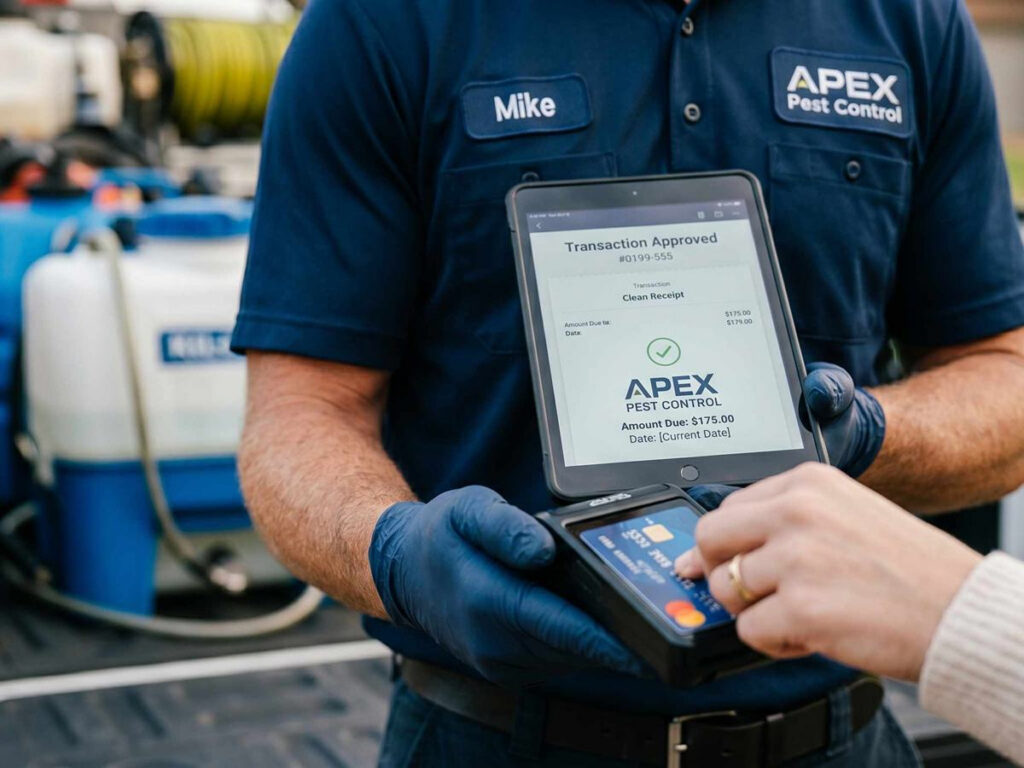
Manual billing tasks can eat up hours of your team’s week.
Printing invoices, tracking overdue balances, sending reminders, and processing recurring payments all take time. Then, as your customer base grows, that workload grows with it.
Pest control billing software helps automate many of those tasks so your office team spends less time chasing payments and more time supporting customers.
Depending on the system, your software can:
That leads to:
Billing software also gives your team one place to manage important payment information, including paid accounts, recurring billing schedules, and overdue balances.
Over time, that visibility makes it easier to stay organized and spot payment issues before they turn into larger cash-flow problems.
Auto-pay makes recurring pest control billing much easier for both your customers and your office team.
Instead of having to remember to pay after every visit, customers are charged automatically after service or on a scheduled billing date. This creates a smoother experience and helps reduce missed or delayed payments.
It also cuts down on reminder calls, overdue invoices, and manual follow-up work for your staff.
Here’s how the process usually works:
For example, imagine you complete a quarterly pest service in April.
Without auto-pay, the customer may intend to pay later, but the invoice slowly slips down their priority list. Your office team then spends the next few weeks sending reminders and following up on the balance.
Auto-pay helps prevent that extra back-and-forth.
Card-on-file systems work especially well for recurring pest control programs because they keep future payments simple and consistent. Many companies also require new recurring customers to save a card on file during signup.
Securely storing payment cards on file can help reduce overdue balances, improve cash flow, and even lower cancellation rates over time.
Sometimes, late payments aren’t intentional. Customers may simply forget, get busy, or plan to pay later and never come back to the invoice.
That’s where payment reminders help.
Automatic reminder texts or emails give customers a simple nudge before the invoice becomes overdue. A message sent three to five days before the due date can encourage faster payment without feeling overly aggressive or pushy.
It also reduces the number of collection calls your office team needs to make later.
For example, your system might send a message like:
“Your pest control invoice is due Friday. You can pay online using the link below.”
Small reminders like this make payment easier and more convenient for customers. Instead of searching for the invoice later, they can simply tap the payment link and pay right away.
RELATED ARTICLE: How to Become a Pest Control Technician
One-time jobs and recurring pest control services should not follow the exact same payment process.
Why? Because one-time and recurring services simply have different billing needs.
With one-time jobs, the goal is usually to collect payment as quickly as possible after the visit. With recurring services, the goal is to make ongoing payments predictable and automatic.
Here’s a quick comparison:
| Billing Type | One-Time Jobs | Recurring Pest Control Service |
| Payment timing | Payment after service | Automatic scheduled payments |
| Best payment method | Card, cash, or online invoice | Auto-pay with card on file |
| Billing goal | Collect payment quickly | Reduce missed payments |
| Office workload | More manual follow-up | Less manual billing work |
| Customer experience | One invoice at a time | Simple recurring billing |
For one-time jobs, speed matters.
Customers are much more likely to pay quickly when the invoice arrives right after the service visit. The work still feels recent, and payment feels like part of the completed job instead of a separate task they need to remember later.
That’s why many pest control companies collect payment before leaving the driveway or before the workday ends.
Recurring pest control services work differently because the billing process repeats month after month or quarter after quarter.
Customers don’t want to manually enter payment information after every visit. Your office team also doesn’t want to spend time calling about the same invoices every billing cycle.
That’s why auto-pay and card-on-file systems work so well for recurring programs.
For example, after a quarterly service visit, your system can automatically process the payment and email the customer a receipt right away. No reminder calls or manual follow-up needed.
To make recurring billing smoother:
Over time, automated recurring billing helps reduce admin work, improve cash flow, and create a more predictable payment process for both your team and your customers.
RELATED ARTICLE: How to Write a Pest Control Contract [Template]
Many pest control companies require upfront payment for large treatments or first-time customers. This helps reduce the number of unpaid invoices and the need for collection work later.
For recurring services, most companies use auto-pay with a card-on-file system instead of collecting payment before each visit.
Auto-pay is usually the easiest and most reliable option for recurring pest control billing. Customers save their payment information once, and payments are processed automatically after the service.
Follow up quickly once an invoice becomes overdue. Automatic reminder texts or emails before the due date can help reduce late payments before they become collection problems.
Yes. Pest control billing software can automate invoices, recurring payments, reminder messages, and overdue account tracking. That reduces manual admin work and helps teams stay organized.
Most customers expect flexible payment options. Pest control companies should typically accept:
Mobile card payments are also useful for collecting payment during one-time service visits.
Getting paid faster does more than improve cash flow. It also reduces office admin, creates a smoother customer experience, and helps your business operate more efficiently as it grows.
When invoices go out quickly, customers are more likely to pay on time. When reminders are sent automatically, your team spends less time chasing overdue balances. And when recurring customers use auto-pay, payments become more predictable month after month.
Small improvements like these can remove a surprising amount of friction from your day-to-day operations.
The best part is that you don’t need to overhaul your entire billing process overnight. Even a few simple changes can make a noticeable difference.
Start by reviewing where payment delays happen most often. Then look for opportunities to speed up invoicing, automate reminders, and simplify recurring billing for your customers.
Over time, those changes can help your company collect payments faster, reduce overdue balances, and create a more reliable payment process for both your customers and your office team.
Operational tax is the hidden cost of unnecessary work that builds as your pest...
Use our free pest control receipt template to document completed services, confirm payments, and...

Download our free pest control overdue notice template kit and learn how to send...