The Hidden Costs of Operational Tax in Pest Control (and How to Spot Them)
Operational tax is the hidden cost of unnecessary work that builds as your pest...
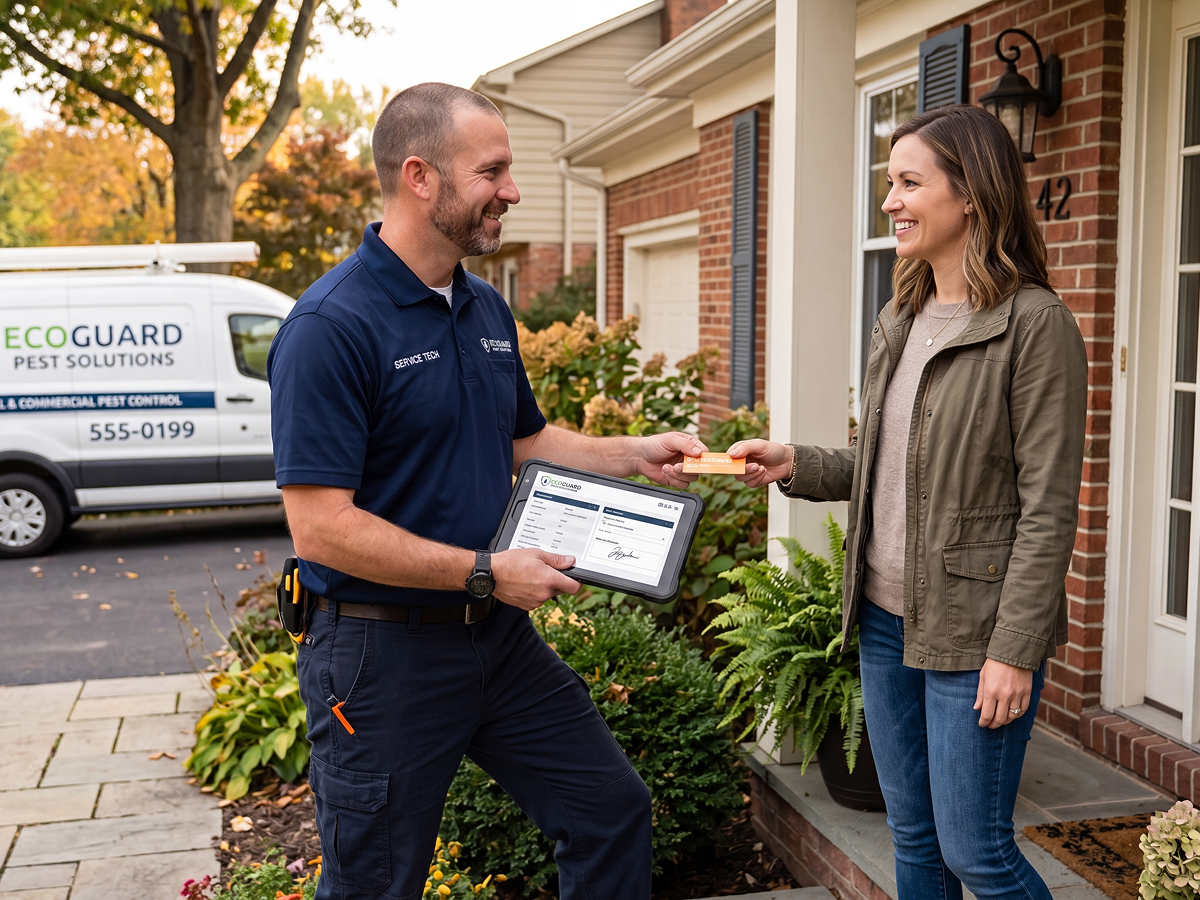
Every pest control company has happy customers. What too many companies miss is turning that satisfaction into a consistent stream of new referrals.
Word-of-mouth marketing is one of the most effective ways to bring in new customers. In fact, 88% of consumers trust recommendations from people they know over other types of advertising.
So, the challenge isn’t that people don’t trust referrals or that satisfied customers don’t want to give them. More often, companies simply don’t ask at the right time or make it easy for customers to refer someone else.
Without a consistent referral process, many pest control companies leave one of their best sources of new business untapped.
The good news is that earning more referrals doesn’t require a complicated marketing strategy. All it takes is a simple, repeatable process that fits naturally into the customer experience.
In this guide, you’ll learn how to build a referral program your team can use after every successful service, turning more satisfied customers into a steady source of new business.
The best pest control referral programs are built into the customer experience. Ask for referrals when customers are most satisfied, make the process easy to complete, and follow up quickly with a thank-you or reward. When your team treats referrals as part of every successful service, they become a reliable source of new customers instead of an occasional bonus.
Referrals are one of the most valuable sources of new business because they come with something advertising can’t buy—trust.
When a friend, neighbor, or family member recommends your company, they’ve already helped answer one of a potential customer’s biggest questions: “Can I trust this business?” That confidence often makes it easier to book the first service.
The impact can be significant. Referrals can generate up to 20% of a company’s annual revenue, making them an important part of a healthy marketing strategy.
Imagine a homeowner hears, “John’s Pest Control took care of our ant problem. They showed up on time, solved the issue, and charged a fair price.”
Now imagine that homeowner finds ants in their own kitchen. They could spend time researching companies online, reading reviews, and comparing prices. Or they could call the company someone they already trust recommended.
Most people choose the second option. That recommendation has already done much of the work before your office phone ever rings.
Here’s what that means for your business:
RELATED ARTICLE: How to Grow a Pest Control Business
The companies that generate referrals regularly don’t leave them to chance. They build simple processes that encourage customers to recommend them at the right time and make it easy to follow through.
Here’s how to build a referral system that becomes part of your everyday operations.
Before you ask for a referral, you have to earn it.
Customers recommend businesses that consistently deliver a great experience. If your technicians show up late, communication is poor, or problems go unresolved, even satisfied customers may hesitate to recommend you.
A referral-worthy experience doesn’t have to be complicated. It starts with doing the basics well:
In fact, customers whose concerns are handled quickly can sometimes become your strongest advocates. A thoughtful resolution shows that your team stands behind its work. And that gives customers even more confidence in recommending your business.
Timing plays a big role in whether customers actually refer your business.
The worst time to ask is on the first invoice or right after a customer signs up. At that point, they haven’t experienced your service yet.
The best time is after they’ve had a positive service experience. When customers feel confident about the results, they’re much more likely to recommend you to someone else.
Here are three moments that work especially well:
A referral program doesn’t have to be complicated. In fact, the simpler it is, the more likely customers are to use it.
Start with three basic decisions. Decide what reward you’ll offer, how customers can make a referral, and how you’ll track each new lead. Once those pieces are in place, your team can repeat the same process after every successful service.
The goal is consistency. Customers should know how the program works, your team should know when to mention it, and every referral should be easy to record and recognize.
Some customers will recommend your business simply because they had a great experience. But a thoughtful incentive can encourage referrals from customers who might not initially think to give them.
The best rewards are easy to understand and quick to deliver. A clear offer like “$25 off your next service” is usually more motivating than a points-based program or a vague future discount. Customers should know exactly what they’ll receive and when they’ll receive it.
Timing matters, too.
If someone refers a friend in January but doesn’t receive their reward until March, the connection is easy to lose. Delivering rewards promptly helps build trust and encourages future referrals.
Also, don’t assume customers will remember your program after hearing about it once. Mention it in service completion texts, renewal reminders, and other customer communications. A simple reminder at the right moment is often enough to generate another referral.
Here are some of the most common incentive options for pest control customers:
| Reward | Best for | How it works |
| Account credit | Recurring pest plans | Credit is applied after the referred customer pays for their first service. |
| Gift card | Higher-value referrals | Send a fixed-value gift card after the referred customer pays. |
| Service upgrade | Companies with add-on services | Offer a mosquito treatment, rodent inspection, or another service where margins allow. |
| Discount for both customers | Driving program participation | Reward both the referring customer and the new customer. |
| Non-financial incentive | Well-established local companies | Send a personal thank-you or offer priority scheduling instead. |
Even customers who want to recommend your business may never get around to it if the process feels like work. The easier you make it, the more likely people are to follow through.
For example, give customers a referral link they can text or email to a friend. Or if your technicians meet customers in person, have them leave behind a simple referral card they can hand to a neighbor. You can also add a “Refer a Friend” button to your customer portal or include referral links in service emails and invoices.
Whatever method you choose, keep the process as simple as possible. The fewer steps between “I’d recommend this company” and “I just sent them a referral,” the better.
When a customer refers someone to your business, don’t let the moment pass without acknowledging it.
A quick thank-you shows that you noticed their effort and appreciate the recommendation. It also reinforces the relationship and gives them another reason to refer someone in the future.
A simple follow-up process can help you stay consistent:
Use this checklist to build a referral program your team can promote every time a customer has a great experience.
A referral program works best when it’s backed by a great customer experience.
Happy customers are more likely to recommend your business when they remember it, trust it, and have positive interactions beyond the day of service.
Reviews, local partnerships, and consistent communication all help reinforce those relationships, making referrals a more natural next step.
Reviews and referrals go hand in hand.
When a customer leaves a five-star Google review, they’re already telling other people they had a good experience. Asking for a referral at that point feels natural because they’ve already recommended your business once.
After thanking customers for their review, let them know they can also recommend you directly to friends, family, or neighbors through your referral program. It’s a simple follow-up that can turn public praise into personal recommendations.
Your response also reaches future customers. Anyone reading your reviews can see that people recommend your business and that you value customer feedback.
And just like referrals, it’s important make reviews easy to leave in the first place. Send a text or email with a direct review link soon after a completed service. The less work customers have to do, the more likely they are to follow through.
Many pest control companies automate review requests, so it’s easy for your team and your customers.
For example, Briostack can automatically send review and referral requests after completed jobs. That helps you stay consistent without adding another task to your team’s day.
RELATED ARTICLE: How to Get Customers to Leave Reviews for Your Local Home Services Business
Your customers aren’t the only people who can refer new business. Local companies that serve the same homeowners and property managers you do can be valuable referral partners, too.
Think about the businesses your customers already trust. Landscapers, real estate agents, property managers, home cleaning companies, and pool service providers all work with many of the same people you do. While they don’t compete with your business, they often hear about pest problems before customers have found a solution.
The best partnerships go both ways. If a customer asks whether you know a reliable landscaper, make a recommendation. When that landscaper hears about a pest problem, they can return the favor by recommending your company.
To get started, reach out to a few local businesses and look for ways to help each other. It also helps to give partners something they can hand to customers. This could be a referral card or a simple flyer that explains how to get in touch with your business.
Customers are much more likely to refer your business when they remember it. And that can be a challenge with recurring pest control.
If you only hear from a company every few months, it’s easy to forget about them, even if you’re happy with the service.
Consistent communication helps keep your business top of mind between visits. It also reminds customers that you’re still looking out for their home, not just showing up for the next appointment.
That doesn’t mean you need to send constant emails or promotional offers. A few well-timed messages can make a big difference.
Appointment reminders, service summaries, and seasonal pest prevention tips all give customers another reason to think about your business.
When people remember the positive experience they’ve had with your company, they’re much more likely to recommend you when a friend or neighbor needs pest control.
RELATED ARTICLE: Marketing 101 for Pest Control Companies
Building a referral program is one thing. Putting it into practice is another. The good news is you don’t have to start from scratch.
Below are ready-to-use templates you can customize with your business name, referral offer, and customer details. Use them as written or adjust the wording to match your brand and communication style.
Subject: Know someone who needs pest control? Here’s a little something for you
Hi [First Name],
We appreciate having you as a customer. It means a lot that you trust us with your home.
If you have a friend, family member, or neighbor who’s dealing with a pest problem, we’d love the opportunity to help them—and thank you for the referral.
Here’s how it works:
All they need to do is mention your name when they call or book online.
Thanks again for being a valued customer.
Hi [First Name]! It’s [Name] from [Business Name]. Thanks again for choosing us for your pest control service.
If you know someone who could use our help, we’d love an introduction. When they complete their first service, we’ll send you [incentive]. They just need to mention your name when they call or book.
Thanks so much!
Subject: How did we do?
Hi [First Name],
Thanks for choosing [Business Name]! We hope everything went smoothly today.
If you’re happy with your service, would you mind leaving us a quick Google review? It only takes a minute, and it helps other homeowners know they can trust our team.
[Leave a review: Google Review link]
If anything wasn’t right, please reply to this email and let us know. We want to make it right.
Thanks again!
Hi [First Name]! Thanks for choosing [Business Name] today. If you have a minute, we’d really appreciate a Google review. It helps other homeowners find us. Here’s the link: [Google Review Link]. Thanks again!
Subject: Thank you for the referral!
Hi [First Name],
[Referral Name] mentioned you referred them to us, and we just wanted to reach out to say thank you!
Your [incentive] has been applied to your account. You’ll see it reflected on your next invoice.
Thanks for trusting us enough to recommend us. Referrals like yours mean a lot to our team. If you ever have questions or need anything, don’t hesitate to reach out.
Thanks again!
Hi [First Name]! Just wanted to say a huge thank you. [Referral Name] just signed up for our services and mentioned that you recommended us. Your [incentive] is on its way. We really appreciate it! 🙏
Thank you, [First Name]! We’re glad we could help. We appreciate you taking the time to leave a review. If you ever know someone who needs pest control, we’d love the opportunity to help them too.
Hi [First Name], thank you for letting us know about your experience. We’re sorry your service didn’t go the way it should have. That’s not the standard we hold ourselves to.
We’d really like the chance to make this right. Please give us a call at [phone number] or reply here so we can discuss a solution.
We appreciate your honesty and hope to hear from you soon.
The companies that generate the most referrals aren’t doing anything extraordinary. They simply make referrals part of how they do business.
They ask at the right time, make it easy for customers to recommend them, and follow up with a thank-you or reward. Then they repeat the process after every successful service.
You don’t have to build the perfect referral program overnight. You can start with just one improvement.
Maybe that’s sending a referral request after every completed service. Maybe it’s launching a simple account credit program for existing customers. The important thing is to build a process your team can repeat consistently.
Over time, those small habits can become one of your most reliable sources of new business.
The right tools can make help make those habits much easier to maintain. Learn how Briostack helps pest control companies automate review requests, customer communication, and referral follow-up so more happy customers become repeat customers—and new referrals.
There’s no universal benchmark because every business has a different customer base and referral process. As a starting point, many companies aim for 10% to 20% of satisfied recurring customers to refer at least one new customer each year. The more consistently you ask for referrals, the more likely you are to reach or exceed that range.
For recurring service businesses, account credits are often the most effective option. Customers receive a clear reward, and they’re encouraged to stay with your business long enough to use it.
Rewarding both customers can encourage more participation. When the new customer and the person making the referral both receive something of value, it’s easier for existing customers to recommend your business with confidence.
If your margins are tight, consider offering a larger reward to the referring customer and a smaller incentive to the new customer.
Referrals are personal recommendations shared with friends, family, or neighbors. Online reviews are public recommendations that help potential customers researching your business.
Both build trust, but they reach people in different ways. Reviews improve your online visibility, while referrals often lead to higher-quality leads because they come from someone the customer already knows.
Yes. Great service and a genuine thank-you are enough for some customers to recommend your business.
That said, a simple incentive can encourage more people to participate, especially when you’re launching a new referral program or trying to build momentum.
Operational tax is the hidden cost of unnecessary work that builds as your pest...
Learn how to build a pest control referral program that consistently generates new business....

Put your business goals into action with our free pest control action plan template....