The Best Lawn Care Software in 2026: An Honest Comparison
Choosing lawn care software isn't just about features. Compare the top platforms for different...
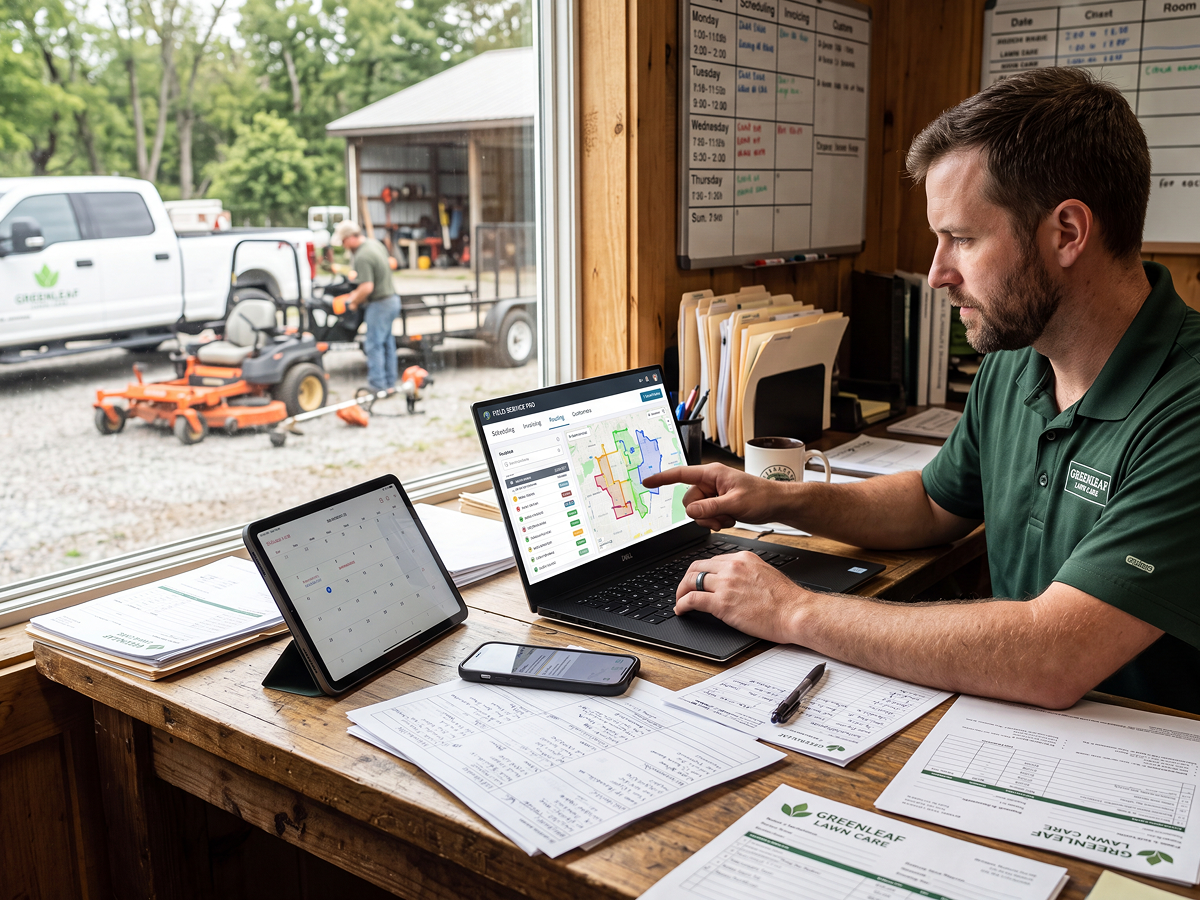
If you started your business with a truck, a few mowers, and a clipboard, a spreadsheet was probably all you needed to stay organized.
But as your customer base grows, recurring service programs become harder to manage, routes get more complex, and admin work starts piling up. Before long, it’s easier for invoices, renewals, and customer follow-ups to slip through the cracks.
The right lawn care software helps you stay ahead of those costly growing pains. Instead of spending more time managing your business, you can spend more time growing it.
This guide compares the best lawn care software in 2026, breaking down each platform’s strengths, limitations, pricing, and ideal use cases. By the end, you’ll have a clear shortlist of the platforms that make the most sense for your business.
The best lawn care software depends on the size of your business, the complexity of your operations, and where you plan to grow. Smaller companies often benefit from simple, easy-to-use platforms, while larger recurring service businesses typically need stronger scheduling, routing, billing, and reporting capabilities. Choosing software that fits both your current needs and your long-term goals can save you from an expensive migration later.
Not sure where to start? Here’s a quick look at our top picks based on different business needs. Use this table to narrow your options, then keep reading for a closer look at each platform.
| Best For | Software |
| Overall | Briostack |
| Small businesses | Jobber |
| Growing companies | Briostack |
| Enterprise operations | ServiceTitan |
| Ease of use | GorillaDesk |
| Route optimization | RealGreen |
No platform is the right fit for every business. The best choice depends on your size, your biggest operational challenges, and where you want to grow.
RELATED ARTICLE: 12 Ways to Grow Your Lawn Care Business
We compared each platform using the features that matter most to lawn care businesses. That includes scheduling, routing, recurring service management, billing, customer communication, reporting, mobile apps, and ease of use.
This guide is published by Briostack, but we’ve done our best to evaluate every platform fairly. If another solution is a better fit for your business, we’ll tell you.
The right software should do more than help you schedule jobs. It should save you time, reduce admin work, and make it easier to grow.
If you run a lawn care business, look for software that can handle:
The more of these jobs your software can handle, the less time you’ll spend on paperwork and the more time you’ll have to focus on your customers.
RELATED ARTICLE: The 9 Best Apps for Lawn Care Businesses
Before diving into the individual reviews, here’s a side-by-side comparison of the platforms across the criteria that matter most to lawn care businesses.
Please note that pricing reflects publicly available information as of 2026. Some vendors don’t publish pricing, so we’ve marked those plans as custom. Because pricing can change and often depends on your company size and feature needs, contact each vendor for a current quote.
If you’re reviewing your software options because you’re also rethinking your pricing, our guide on how to charge for lawn care services can help you build a more profitable pricing strategy.
| Symbol | What It Means |
| $ | Under $100/month |
| $$ | $100–$300/month |
| $$$ | $300–$600/month |
| $$$$ | $600+/month or custom enterprise pricing |
| Software | Best For | Company Size | Standout Strength | Pricing |
| Briostack | Growing recurring service businesses | Small to mid | Recurring service management and operational efficiency | $–$$$ |
| RealGreen | Route-heavy operations | Mid to large | Advanced route optimization and chemical compliance | $$$–$$$$ |
| Jobber | Small teams | Small to mid | Ease of use and fast onboarding | $–$$$ |
| Service Autopilot | Automation-focused businesses | Mid to large | Workflow automation and recurring service management | $$ |
| ServiceTitan | Enterprise operations | Large/Enterprise | Enterprise reporting and dispatch | $$$$ |
| Aspire | Commercial landscape contractors | $2M+ revenue | Job costing and commercial operations | $$$$ |
| GorillaDesk | Budget-conscious businesses | Small to mid | Simple setup and affordability | $ |
| LMN | Estimating and design-build | Mid to large | Estimating and job costing | $$ |
| SingleOps | Mixed-service companies | Mid to large | Proposals and crew management | $$–$$$ |
| QuoteIQ | Mobile-first small crews | Solo to small | Fast estimating and aerial property measurement | $ |
The comparison table is a good starting point, but it doesn’t tell the whole story. The reviews below take a closer look at each platform’s strengths, limitations, and the type of lawn care business it’s best suited for.
Best for: Growing pest control and lawn care companies running recurring service programs
Company size: 5–30+ employees
Briostack is built for recurring service businesses, not one-time jobs. It combines scheduling, routing, billing, and customer communication in one platform, making it easier to manage the day-to-day work that comes with a growing customer base.
If you’re running weekly or monthly service programs across dozens—or hundreds—of accounts, having those workflows connected can save a significant amount of administrative time.
One area where Briostack stands out is its built-in door-to-door sales tools. That’s uncommon in lawn care software and gives companies another way to grow their customer base without relying solely on outside sales tools or manual processes.
RELATED: See Briostack in Action
Best for: Route-heavy operations and franchise networks
Company size: Mid-size to large
RealGreen has been serving the green industry for more than 40 years, and that experience shows. The platform is especially strong in route optimization and lawn care-specific workflows, including chemical compliance tracking that many competitors don’t match.
The tradeoff is complexity. RealGreen offers a deep feature set, but it comes with a steeper learning curve. For larger businesses, that investment may be worthwhile. Smaller companies, however, may find they’re paying for capabilities they’ll rarely use.
Best for: Small teams prioritizing ease of use
Company size: 1–20 employees
Jobber is one of the easiest platforms to learn, making it a popular choice for businesses moving beyond spreadsheets.
The interface is clean, the mobile app is well designed, and customers can approve quotes and pay online, helping you get from estimate to payment with less back-and-forth.
As your business grows, though, you may start to outgrow some of Jobber’s capabilities. Features like route optimization are only available on higher-tier plans. The platform also isn’t as well suited for businesses managing large recurring service programs.
Best for: Lawn care companies needing deep automation and chemical tracking
Company size: 5–50 employees
Service Autopilot is built for recurring service businesses and has one of the most powerful automation engines in the category. If you want to automate renewal reminders, follow-up campaigns, and chemical tracking, it can handle all of that within a single platform.
That level of automation comes with a tradeoff, though.
Getting the most out of the platform takes time, and the initial setup can be complex. Companies that invest the effort often see meaningful efficiency gains, while those looking for a simpler solution may find they’re paying for features they never fully use.
Best for: Enterprise operations with high job volume
Company size: 20+ employees, typically 15+ trucks
ServiceTitan is one of the most comprehensive field service platforms on the market. Its reporting, dispatching, and integrations make it a strong choice for large, complex operations that need visibility across multiple teams.
That capability comes at a premium. Pricing ranges from $245 to $398 per technician per month, plus implementation fees that can reach five figures.
For most growing lawn care businesses, that’s more software—and more investment—than they need.
Best for: Large commercial landscape contractors
Company size: $2M+ revenue
Aspire is built for commercial landscape businesses with multiple crews, snow removal divisions, and complex job costing needs. Its estimating, production tracking, and profitability reporting give larger operations the visibility they need to manage high-volume work.
Like ServiceTitan, Aspire requires a significant investment in both time and money. If you don’t have dedicated office staff to manage the platform, it can be difficult to take full advantage of everything it offers.
Best for: Small operations that want simple, affordable lawn care software
Company size: 1–10 employees
GorillaDesk has earned a reputation for being easy to use. The interface is straightforward and onboarding is quick. Route optimization is included even on the basic plan, which is something many competitors reserve for higher pricing tiers.
As your business grows, though, you may begin to run into its limits. Companies with larger teams or more complex recurring service programs often need stronger automation and reporting.
Best for: Companies with heavy estimating needs and design-build work
Company size: Mid to large
Many operators still know the platform as LMN, though it now operates under the Granum brand.
LMN stands out for its estimating and job costing tools. If your business combines design-build projects with recurring maintenance, its budgeting and labor tracking capabilities are a strong fit.
For companies focused primarily on recurring lawn care, however, the routing and billing tools aren’t as robust as some competitors.
Best for: Tree care, plant healthcare, and commercial landscape companies with mixed service lines
Company size: 5–30 employees
Like LMN, SingleOps is now part of the Granum family, though it continues to operate under its original name.
SingleOps is a good fit for companies that combine lawn care with tree care or commercial services. Its proposal tools, customer management, and crew tracking support businesses with a broader mix of services.
Route optimization is only available on higher-tier plans, which is worth considering if routing efficiency is a priority.
Best for: Small crews that need fast estimating, aerial property measurement, and a mobile-first experience
Company size: 1–25 employees
QuoteIQ built its reputation on fast estimating and aerial property measurement. You can measure a property, create a quote, and send it to the customer without leaving the app. This makes it an efficient option for small teams that spend most of their time in the field.
As your business grows, you may find yourself wanting stronger recurring service management and automation than QuoteIQ currently offers.
RELATED ARTICLE: How to Sell Lawn Care Services
More features don’t always mean a better fit. The best software is the one that solves your biggest operational challenges without adding unnecessary complexity.
Use these four questions to narrow your options before you schedule a demo.
Your software should match the size of your business. A solo operator doesn’t need enterprise dispatching tools, and a 20-truck operation will quickly outgrow a basic scheduling app.
| Business Size | Focus On |
| Solo to 5 employees | Ease of use, mobile app, affordable entry price |
| 5–20 employees | Routing, recurring billing, customer communication |
| 20+ employees | Scalability, reporting, multi-crew dispatch |
Don’t shop for software—shop for solutions.
If invoicing is slowing down your cash flow, focus on billing automation. If technicians spend too much time driving between jobs, prioritize routing. If recurring customers are slipping through the cracks, look for stronger recurring service management.
The right software should solve the problems that are holding your business back today.
The monthly subscription is only part of the investment. Before you commit, ask about implementation fees, onboarding costs, per-user pricing, and contract terms.
Ask every vendor these three questions:
The cheapest option today can become the most expensive one later if you outgrow it and have to switch platforms.
Choose software that supports where you want your business to be in a few years, not just where it is today.
The best lawn care software isn’t necessarily the one with the most features or the biggest name. It’s the one that fits the way your business operates today while giving you room to grow tomorrow.
As you compare your options, think beyond your immediate needs. Consider how you’ll manage more customers, more recurring services, and a larger team over the next few years.
Choosing software that can grow with your business can save you from a costly migration later.
There’s no single “best” platform for every lawn care business. But if you’re narrowing down your shortlist, these are the platforms we’d recommend based on different needs:
Yes—especially if you offer recurring services. If you’re spending too much time on scheduling, invoicing, or following up with customers, even a basic platform can save hours each week while helping you keep routes full and payments on track.
Pricing ranges from under $50 per month for basic tools to $600 or more for enterprise platforms. Most growing lawn care businesses will likely spend between $100 and $300 per month. Just remember that implementation fees, onboarding costs, and per-user pricing can add significantly to the total investment.
Yes. Better routing, automated billing, and recurring service management help you complete more work with less administrative effort. Over time, those efficiency gains can translate into more jobs, faster payments, and stronger recurring revenue.
That depends on the platform. Simpler systems like GorillaDesk or Jobber can often be up and running within a few days. More complex platforms like RealGreen or ServiceTitan may take four to eight weeks or longer to fully implement.
Start with the basics:
Choosing lawn care software isn't just about features. Compare the top platforms for different...
Looking for the best pest control software? Compare top platforms for 2026 and learn...

Looking for the best lawn care apps? We’ve rounded up nine top tools to...