The Hidden Costs of Operational Tax in Pest Control (and How to Spot Them)
Operational tax is the hidden cost of unnecessary work that builds as your pest...
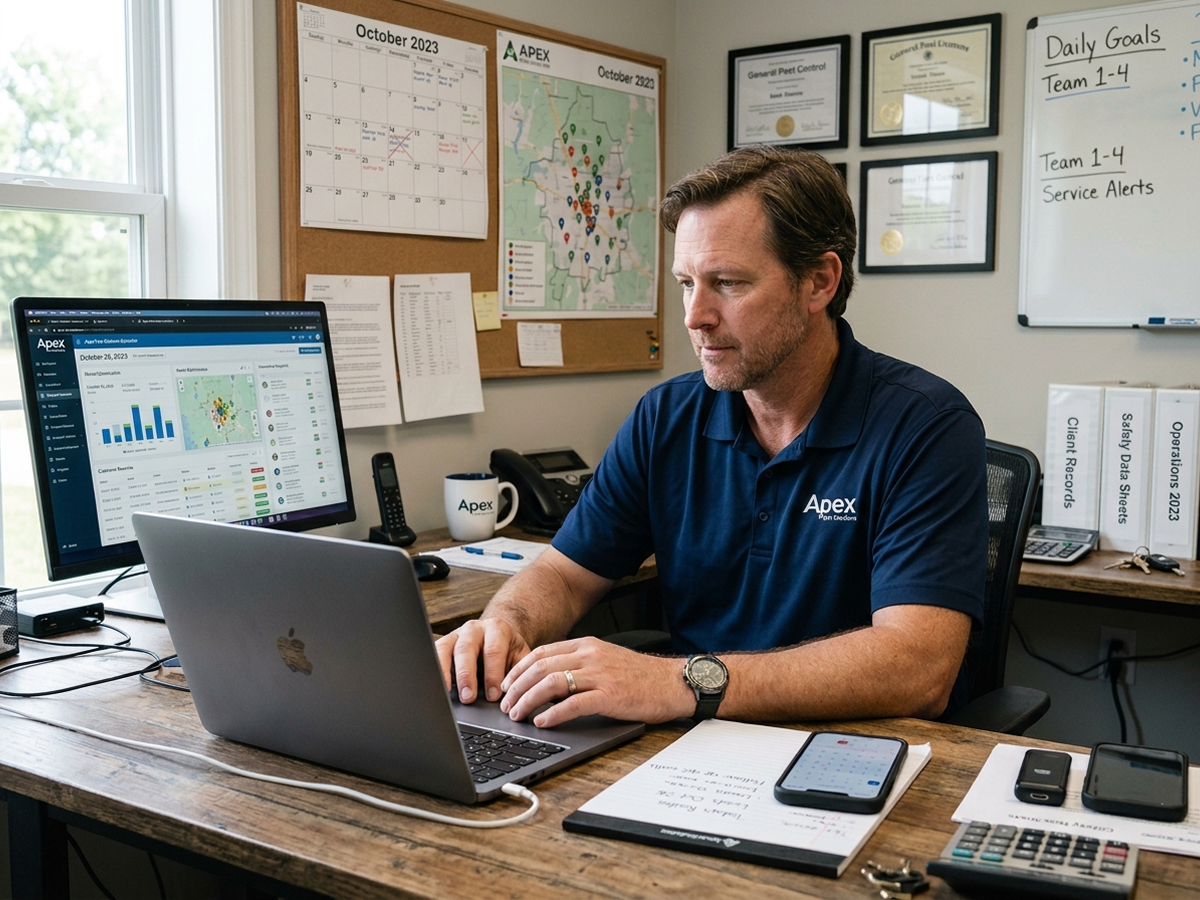
Growing a pest control business is exciting. It’s also a time when things can start getting messy.
More customers mean more appointments to schedule, routes to manage, invoices to send, and customer questions to answer.
The systems that worked when you had a few technicians can quickly become harder to manage as your business grows.
That’s where automation can help.
Many tasks that once required manual work can happen automatically—scheduling, dispatching, invoicing, customer follow-ups, compliance tracking, and so on.
With those tasks handled, your team has more time and fewer administrative headaches. Then, they can spend that time delivering a better customer experience.
And that’s becoming more and more important in a competitive industry.
There are more than 32,000 pest control companies operating across the U.S. Standing out isn’t just about winning new customers. It’s also about building efficient processes that help you serve more customers without adding more office work.
Automation can be an intimidating concept. But the good news is that you don’t have to automate everything at once. A few small changes can make a big difference.
In this guide, we’ll look at the manual pest control processes that are often the best places to start, how AI is changing day-to-day operations, and how growing companies are using automation to scale more efficiently.
As pest control companies grow, manual processes can create bottlenecks in scheduling, billing, customer communication, and compliance. Automation helps reduce repetitive administrative work, improve efficiency, and free up staff to focus on higher-value tasks. Many businesses start by automating scheduling, routing, invoicing, and customer communications, then expand into AI-powered tools that support dispatching, reporting, and operational decision-making. With the right software, companies can scale their operations without adding the same amount of office work.
Most pest control companies don’t start with complicated systems.
When you’re small, it’s possible to manage scheduling, invoicing, customer communication, and reporting manually. But as your business grows, those processes become harder to keep up with.
The challenge isn’t usually one major problem. It’s dozens of small tasks that add up throughout the day.
A recurring customer needs to be scheduled. A technician’s route needs to be adjusted. An invoice needs to be sent. A customer calls asking when their technician will arrive. Someone needs a compliance record from a service completed months ago.
None of those tasks are difficult on their own. The problem is volume.
As your customer base grows, manual work starts creating bottlenecks. Office staff spend more time coordinating schedules and less time helping customers. Dispatching becomes more complicated. Invoices take longer to send. Follow-ups get missed.
Some of the most common challenges include:
Most of these problems have the same root cause—too many manual processes and not enough visibility.
When that happens, growth creates more administrative work instead of more opportunity. Your team spends their day reacting to problems instead of improving operations.
That’s why many growing pest control companies turn to automation. It helps reduce repetitive work, improve consistency, and give teams more time to focus on serving customers and growing the business.
RELATED ARTICLE: The Latest Pest Control Technology Trends and Innovations
When getting started with automation, focus on the tasks that consume the most time or create the biggest bottlenecks. Those are usually the areas where you’ll see the fastest return.
Recurring services are one of the easiest processes to automate.
Instead of manually creating future appointments, pest control scheduling software can automatically generate recurring visits based on a customer’s service plan. That reduces administrative work and helps prevent appointments from slipping through the cracks.
As schedules change, everyone stays on the same page with updated calendars and technician schedules.
As appointment volume grows, routing becomes harder to manage manually.
Route optimization software helps build more efficient routes based on technician availability, location, and other scheduling factors. That can reduce drive time by 20-40%, lower fuel costs, and create room for more appointments each day.
Customers want to know when you’re coming and what to expect.
Automated text messages and emails can send appointment reminders, notify customers when technicians are on the way, and follow up after service. Your customers get better communication without creating extra work for your office team.
The longer it takes to send an invoice, the longer it usually takes to get paid. And even then, customers often don’t pay as soon as they receive an invoice.
In home services, there’s an average gap of 15-30 days between sending an invoice and receiving payment.
Automated invoicing helps with that by getting invoices out faster and creating a smoother payment process for customers. Many platforms also support online payments, making it easier to collect revenue quickly.
Compliance documentation is critical in pest control. But managing records manually can be time-consuming.
Automation helps track chemical usage, service records, and other required documentation as work is completed. As a result, reporting is easier and there’s less of a risk that information will be missing when you need it later.
Good decisions depend on good data. Reporting automation gives you quick access to information about key metrics like:
Instead of spending time building reports, you can spend time acting on the insights.
Following up consistently is one of the biggest challenges for growing companies.
Automation can help assign leads, trigger follow-up emails, track opportunities, and keep prospects moving through the sales process. That reduces the chances of leads going cold and helps create a more consistent sales workflow.
As you can see, even small automation improvements can have a meaningful impact across your business. Here’s a quick comparison of how common manual processes change when automation is introduced.
| Manual Process | Automated Workflow | Business Impact |
| Scheduling jobs one at a time | Recurring services scheduled automatically | Saves administrative time and reduces scheduling errors |
| Building routes manually | Route optimization based on appointments and technician availability | Reduces drive time, fuel costs, and technician downtime |
| Sending individual appointment reminders | Automated customer reminders and notifications | Reduces no-shows and improves customer communication |
| Creating invoices after each job | Automatic invoicing when work is completed | Gets invoices out faster and improves cash flow |
| Tracking field activity through calls, texts, or paperwork | Standardized field workflows and digital reporting | Improves technician productivity and visibility |
| Managing compliance records manually | Automatic chemical logging and compliance tracking | Simplifies reporting and creates audit-ready records |
| Building reports from multiple spreadsheets | Real-time reporting and dashboards | Provides faster insights for business decisions |
| Following up with leads manually | Automated lead assignments and follow-up workflows | Helps prevent missed opportunities and supports growth |
Automation handles repetitive tasks. AI helps teams make faster, smarter decisions.
Together, they’re changing how pest control companies schedule work, manage routes, communicate with customers, and monitor performance.
One of the most practical uses of AI is route planning.
Instead of manually adjusting routes throughout the day, AI-powered tools can analyze factors like technician location, traffic conditions, appointment schedules, and route density. The system can then recommend more efficient routes or adjust schedules when conditions change.
The result is less drive time, more completed appointments, and fewer scheduling headaches.
Most pest control companies collect a lot of data. The challenge is turning that data into useful information.
AI can help you identify trends, spot operational issues, and surface insights that might otherwise go unnoticed. For example, it may reveal rising fuel costs, declining revenue per technician, or seasonal increases in certain service types.
That gives business owners more information to guide decisions around pricing, staffing, marketing, and operations.
RELATED ARTICLE: 6 Ways to Reduce Fuel Costs for Your Pest Control Business
Customer communication is another area where AI and automation work well together.
These tools can help with many aspects of communication, such as:
The goal isn’t to replace personal service. It’s to make sure customers receive timely communication without creating more work for your team.
AI can also help your managers better understand what’s happening in the field. It can analyze useful information like job completion data, route performance, customer feedback, and technician activity.
That visibility can help you identify opportunities to improve efficiency and address problems earlier. It also makes it easier to support technicians, improve processes, and make informed decisions as your business grows.
The most successful pest control companies aren’t using AI to replace employees. They’re using it to reduce repetitive work and give their teams better information.
When office staff spend less time on manual tasks and technicians spend less time dealing with scheduling issues, everyone has more time to focus on customers and business growth.
Growth should create new opportunities, not more paperwork.
But for many pest control companies, that’s exactly what happens. More customers often lead to more scheduling, more invoicing, more follow-up, and more time spent managing day-to-day operations.
Automation helps break that cycle.
By reducing repetitive work and improving visibility across the business, automation gives your team more time to focus on customers, service quality, and long-term growth. The result is a business that can handle more volume without creating the same amount of administrative burden behind the scenes.
If you’re evaluating ways to automate scheduling, routing, invoicing, customer communication, and other core workflows, Briostack can help.
Request a demo to see how growing pest control companies use automation to work more efficiently and scale with confidence.
No. Automation is designed to reduce repetitive work, not replace people.
Tasks like scheduling, invoicing, appointment reminders, and reporting can happen automatically. This gives office staff more time to focus on customer service, problem-solving, and business growth.
Start with automating the tasks that take the most time or create the biggest bottlenecks.
For many pest control companies, that includes scheduling, routing, dispatching, invoicing, and customer communication. Automating those processes often delivers the fastest return because they affect daily operations across the business.
Yes. Automation is especially useful for recurring service programs.
Instead of manually creating future appointments, software can automatically schedule recurring visits based on a customer’s service plan.
Many platforms can also automate reminders, invoicing, and payment collection. This helps reduce administrative work and keep services on schedule.
The best automation software should help simplify daily operations without creating more complexity.
Look for features such as:
Just as importantly, choose a platform that’s easy for your team to adopt and can support your growth over time.
Operational tax is the hidden cost of unnecessary work that builds as your pest...
Use our free pest control receipt template to document completed services, confirm payments, and...
Download our free pest control overdue notice template kit and learn how to send...