Pest Control Receipt Template for Better Payment Documentation
Use our free pest control receipt template to document completed services, confirm payments, and...
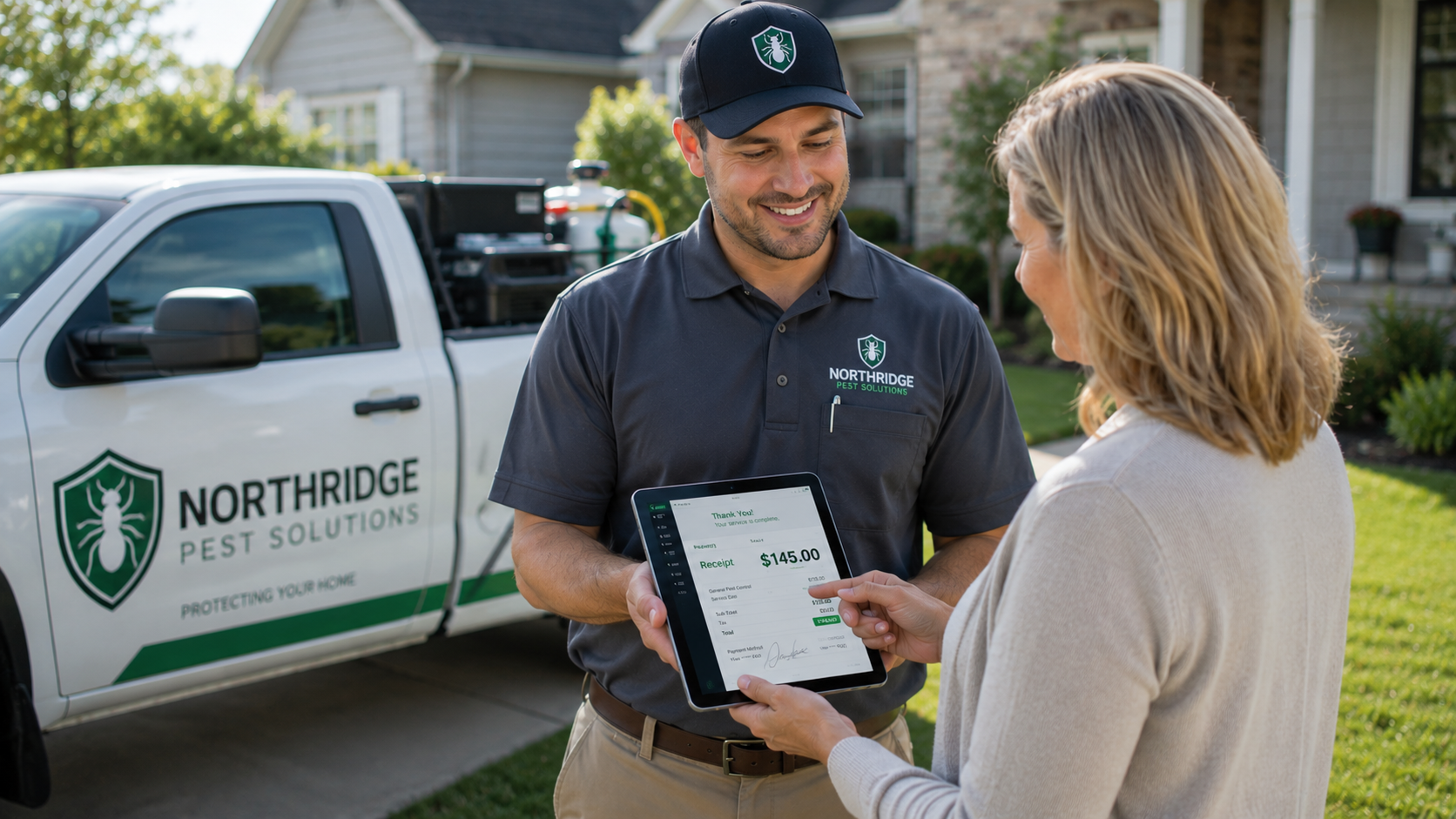
Every completed pest control service should end with clear, professional payment documentation.
A pest control receipt confirms payment while creating a record of the services performed, products used, and recommendations provided during the visit. It protects both your business and your customer by documenting what was completed, when it was completed, and how payment was made.
Whether you provide one-time treatments or recurring pest control services, a standardized receipt helps your team stay consistent, reduce paperwork errors, and present a more professional image.
In this article, you can download our free pest control receipt template, learn what to include in a professional receipt, and see how standardized documentation helps simplify recordkeeping and customer
Creating receipts manually after every job takes time and increases the chance of leaving out important information.
Our free pest control receipt template provides a professional, standardized format designed specifically for pest control companies. It includes fields for:
Download the template, customize it for your business, and use it to create consistent, professional records for every completed service.
A pest control receipt is a document issued after payment has been received for completed services. It confirms payment while documenting what work was performed, who completed it, how much was paid, and when payment was received.
For pest control businesses, receipts do more than prove payment. They create a permanent record that can help with:
Unlike a generic service receipt, a pest control receipt may also include treatment details such as target pests, products applied, treatment areas, EPA registration numbers, technician information, and follow-up recommendations.
Those details improve recordkeeping, support future service visits, and give customers confidence that the work was properly documented.
Important: Tax, recordkeeping, and pesticide documentation requirements vary by state and jurisdiction. This article provides general information and should not be considered tax or legal advice. Consult your state’s regulations or a qualified tax or legal professional for requirements that apply to your business.
RELATED ARTICLE: How to Improve Your Pest Control Invoice Process
One of the most common billing questions is whether you need both an invoice and a receipt. The answer is yes.
Invoices and receipts serve different purposes in your billing process. An invoice requests payment for completed work. A receipt confirms that payment has been received.
Most pest control jobs use both documents in a workflow like this:
Estimate → Service Completed → Invoice → Payment → Receipt
Using both creates a clear paper trail for your business and your customers.
| Invoice | Receipt |
| Requests payment | Confirms payment has been received |
| Sent before payment | Sent after payment |
| Lists the amount due | Lists the amount paid |
| Includes payment terms and due date | Includes payment date and payment method |
| Tracks accounts receivable | Supports bookkeeping and customer records |
| Establishes the payment agreement | Serves as proof the agreement was fulfilled |
For pest control businesses, receipts may also include treatment details, products applied, and follow-up recommendations that aren’t typically included on an invoice.
RELATED ARTICLE: Free Pest Control Invoice Template
A professional pest control receipt should document both the payment and the completed service. The goal is to create a clear record that’s useful for your customer today and easy for your office to reference later.
At a minimum, every receipt should include:
Depending on your business or local regulations, you may also want to document target pests, products applied, EPA registration numbers, treatment areas, and follow-up recommendations. Including these details creates a more complete service history and can help support future service visits, warranty claims, or customer questions.
A standardized receipt template helps ensure every technician records the same information, making your documentation more consistent and easier to manage as your business grows.
Once you’ve downloaded the template, customize it with your business information, including your company name, logo, contact details, and license number if applicable.
For each completed service, fill in the customer’s information, receipt number, service and treatment details, payment summary, and any follow-up recommendations or technician notes. Before sending the receipt, double-check that all payment information is accurate.
Save a copy for your records and provide one to the customer by email or in print. Keeping receipts alongside invoices and customer records makes it easier to track payments and reference past services.
Using a standardized template is a good start, but following a consistent process makes your records even more valuable.
Here are a few best practices:
RELATED ARTICLE: How to Collect Payments from Pest Control Customers
A receipt template is a great way to standardize your documentation. As your business grows, though, manually creating, sending, and storing receipts after every payment can become time-consuming.
With integrated pest control software, receipts can be generated automatically when an invoice is paid, emailed to the customer, and saved to the customer’s account alongside invoices, payment history, and service records.
Automating receipt management can help your business:
With Briostack, receipt generation is built into your billing workflow, helping your team spend less time on paperwork while keeping customer records accurate and organized.
Learn more about how Briostack’s pest control software helps automate invoicing, payments, and customer recordkeeping.
Use our free pest control receipt template to document completed services, confirm payments, and...

Download our free pest control overdue notice template kit and learn how to send...

Put your business goals into action with our free pest control action plan template....