The Hidden Costs of Operational Tax in Pest Control (and How to Spot Them)
Operational tax is the hidden cost of unnecessary work that builds as your pest...
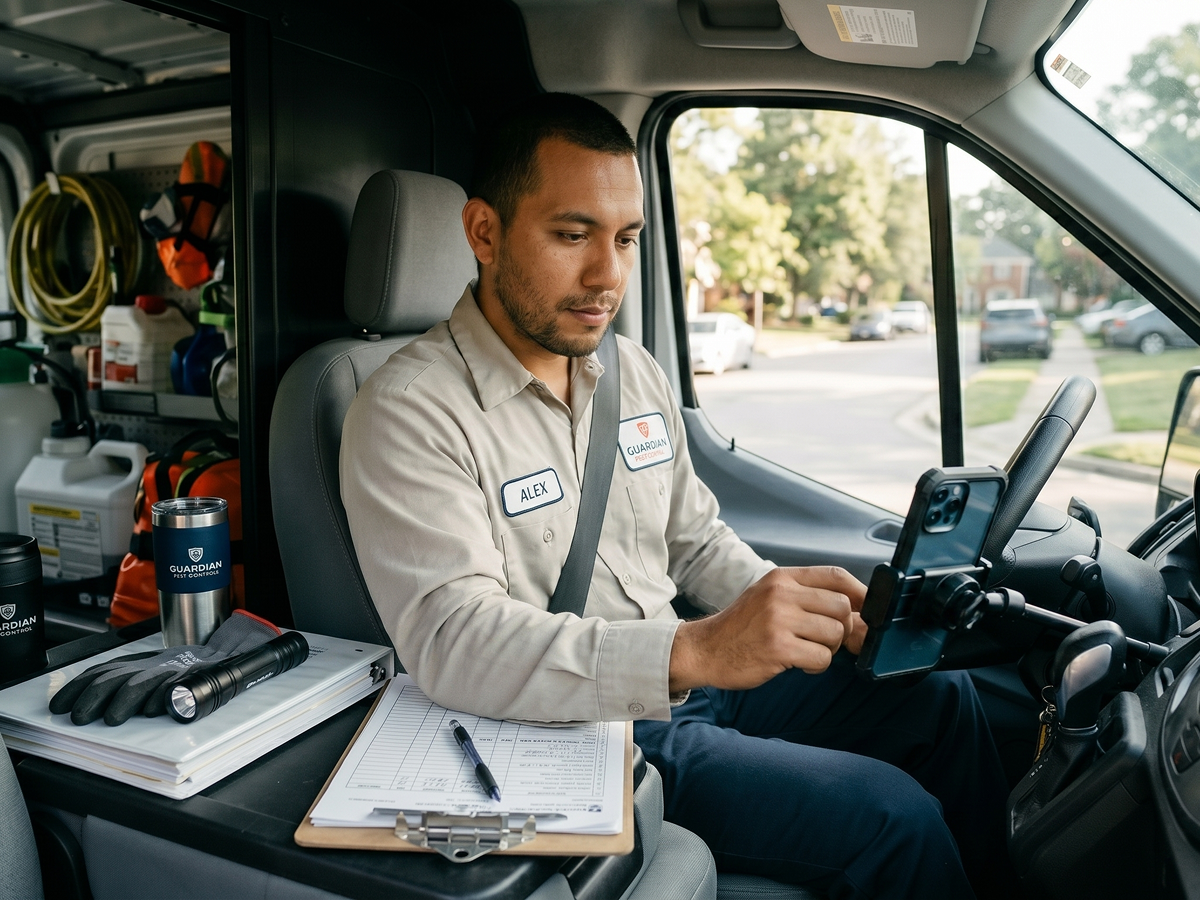
Pest control routing can make or break your daily efficiency.
When technicians spend too much time driving between appointments, everything slows down. You complete fewer jobs, burn more fuel, and deal with more scheduling headaches in the office. One delayed stop can easily throw the rest of the day off track.
And as your business grows, those problems usually get worse.
More customers, more routes, and more recurring services create more moving parts to manage. Without a solid routing process, it’s easy for wasted drive time and scheduling bottlenecks to eat into your profits.
The good news is that better routing doesn’t always require major changes. Often, small adjustments to how you group appointments, assign territories, and schedule recurring services can make a noticeable difference.
In this guide, we’ll walk through eight practical pest control routing tips to help you:
We’ll also cover how pest control scheduling and routing software can help automate many of these processes as your operation grows.
Inefficient pest control routes create problems across your entire operation, not just in the field.
At first, the issues might seem small. A technician spends a little too much time driving across town. One appointment runs late. A dispatcher has to reshuffle part of the schedule midday.
But over time, those small inefficiencies stack up.
When your technicians spend less time servicing customers and more time sitting in traffic, it limits how many appointments they can complete each day. Fuel costs climb. Overtime becomes more common. And the office team ends up spending more time reacting to scheduling problems instead of helping grow the business.
Poor routing also creates a ripple effect throughout the customer experience.
When one appointment falls behind, the rest of the route often follows. Customers wait longer than expected, call asking where the technician is, or become frustrated with inconsistent arrival windows.
Over time, that can hurt trust and retention, especially for recurring services where consistency matters.
The operational impact adds up quickly:
For growing companies, inefficient routing also affects your ability to scale.
You can’t efficiently grow recurring service routes if your existing schedule is already overloaded and disorganized. Eventually, you reach a point where adding more customers also means adding more administrative strain.
That’s why strong routing processes matter so much. Better routes don’t just help technicians drive less. They create a more stable, profitable operation overall.
RELATED ARTICLE: How to Use a Lawn Care Route Planner to Maximize Profits
Small routing improvements can have a big impact over time.
When technicians spend less time driving, they can complete more appointments each day without adding overtime. Your office staff also spends less time rearranging schedules or handling customer complaints about late arrivals.
The savings add up quickly across fuel, labor, and appointment capacity.
The exact results will vary depending on your service area, route density, team size, and current scheduling process. But businesses that improve route organization often reduce drive time, lower overtime costs, and create room for more appointments each week.
The example below shows what those operational improvements can look like for a growing pest control company over a typical month.
| Operational Area | Before Optimization | After Optimization | Estimated Monthly Impact |
| Fuel costs | $3,520 | $2,200 | $1,320 saved |
| Overtime labor | $1,530 | $495 | $1,035 saved |
| Daily appointment capacity | 35 jobs | 50 jobs | 15 extra jobs per day |
| Potential added monthly appointments | 770 jobs | 1,100 jobs | 330 additional appointments |
| Technician driving hours per month | 418 hours | 231 hours | 187 hours recovered |
Those gains don’t just improve efficiency, either. They also create more room for growth without immediately needing to hire more office staff or add more trucks to the road.
The strategies below can help you build tighter, more efficient routes while creating a smoother experience for both technicians and customers.
One of the easiest ways to improve pest control routing is to group nearby appointments together.
The less time technicians spend driving across town, the more time they have for service visits. That helps you fit more appointments into each day while reducing fuel costs and overtime hours.
For example:
That saves roughly $6–7 per truck each day in fuel alone.
Now scale that across:
Suddenly, you’re saving more than $700 monthly just on fuel. Plus, there’s the added value of recovered technician time and extra appointment capacity.
Grouping nearby customers also creates more predictable schedules.
With more consistent scheduling, technicians spend less time stuck in traffic. Customers get more reliable arrival windows. And your office staff spends less time handling scheduling problems throughout the day.
As recurring routes grow, keeping appointments clustered by area becomes even more important for maintaining efficiency.
Technician territories give each of your technicians a consistent service area instead of sending them all over town every day.
When technicians regularly work in the same neighborhoods or zip codes, they become more familiar with the area. They learn traffic patterns, gate codes, parking issues, and customer preferences, which helps routes run more efficiently over time.
Territories also reduce unnecessary route overlap. Without them, multiple technicians can easily end up servicing the same area on the same day. That wastes drive time and limits appointment capacity.
Consistent territories can help you create:
Customers often prefer seeing the same technician during recurring visits, too. Familiarity builds trust and helps technicians work more efficiently because they already know the property and treatment history.
For office staff, territories make scheduling easier as your business grows. Dispatchers can quickly assign new appointments without constantly rebuilding routes from scratch.
Manual route planning gets harder to manage as your business grows.
Once you’re juggling recurring services, technician availability, and last-minute schedule changes, spreadsheets and whiteboards start slowing things down. Routes become harder to organize efficiently, and small scheduling problems can quickly throw the day off track.
Route optimization software helps solve that by automatically organizing appointments based on things like drive time, technician availability, service areas, and appointment timing.
That means less manual scheduling work for your office team and more efficient routes for technicians in the field.
It also helps prevent scheduling conflicts before the day starts.
For example, a dispatcher might accidentally schedule a termite inspection at 9 a.m. and a mosquito treatment 35 minutes away at 10 a.m. One small mistake like that can throw off the entire route for the day.
Routing software helps catch those issues early so your team spends less time reacting to scheduling problems throughout the day.
Over time, better routing can help you:
Not all routing tools are built specifically for pest control operations, so it’s important to look for features that support recurring services and daily route management.
Here’s a quick checklist of important capabilities to keep in mind while evaluating your options:
Overpacking your schedule can create problems that snowball throughout the day.
One appointment runs long. Traffic causes another delay. Before long, the technician is behind schedule for every remaining stop on the route.
That creates frustration for both customers and your office team.
Instead, build buffer time into your daily routes, especially for:
Even an extra 10–15 minutes between certain appointments can help keep the rest of the route on track.
This also gives technicians more flexibility to handle unexpected issues without immediately throwing off the entire schedule. Customers get more reliable arrival windows, and your office staff spends less time making apology calls or rearranging appointments mid-day.
As your recurring routes grow, those small scheduling buffers become even more important for maintaining consistency and reducing daily scheduling stress.
RELATED ARTICLE: 8 Ways Pest Control & Lawn Care Companies Can Reduce Missed Calls
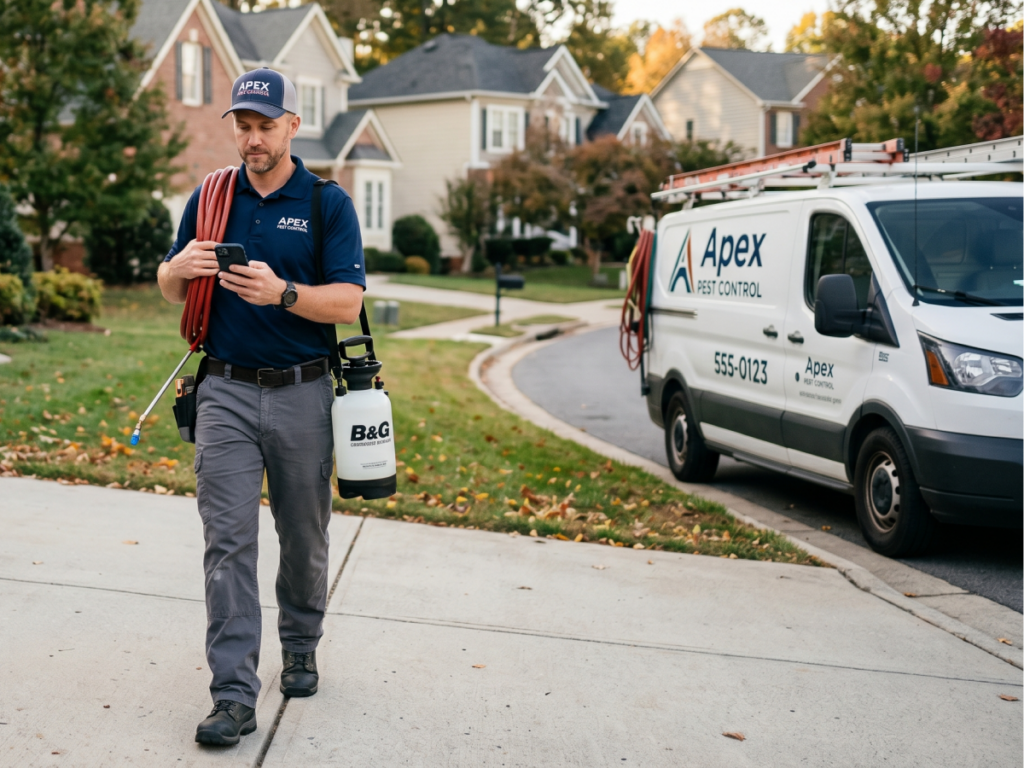
Not every pest control service fits neatly into the same route structure.
A termite inspection usually takes longer than a standard quarterly spray. Mosquito treatments may depend on weather conditions. Large commercial visits can easily disrupt a tightly packed residential route.
When very different service types are mixed together randomly, schedules become harder to predict, and routes fall behind more easily.
Instead, organize routes around similar types of work whenever possible. For example, you might dedicate certain days or route blocks to inspections, recurring residential treatments, or larger commercial accounts.
That creates more predictable scheduling, helps technicians stay on pace throughout the day, and makes it easier to estimate appointment timing accurately.
It also reduces stress on the office side. Dispatchers spend less time adjusting routes mid-day when appointments are structured around similar service demands from the start.
You can’t improve routing problems if nobody is tracking them.
Small inefficiencies are easy to miss during busy weeks. Over time, though, they can reduce appointment capacity, increase overtime, and create scheduling bottlenecks.
That’s why regular route reviews are important.
Use your scheduling or routing software to monitor things like:
For example, you may notice two technicians repeatedly servicing the same area on the same afternoon. That wastes drive time and limits how many appointments your team can complete each day.
Weekly route reviews help you catch those patterns early, so small inefficiencies don’t turn into larger operational problems as your routes grow.
Route density means keeping more recurring customers close together within the same service area.
The closer appointments are to each other, the less time technicians spend driving between stops. That creates tighter routes, lower fuel costs, and more room for additional appointments each day.
For example, there’s a big difference between servicing 18 homes in one neighborhood and servicing 18 homes spread across four towns
The second route usually means more mileage, more downtime, and fewer completed jobs by the end of the day.
One of the best ways to improve route density is to add new recurring customers near existing routes whenever possible. When a new lead comes in, check whether another technician already services nearby homes.
Over time, denser routes can help you:
Customers benefit too. Technicians arrive more consistently because they spend less time driving across large service areas throughout the day.
Recurring routes are easier to manage when customers in the same area stay on the same service cycle.
Instead of placing quarterly visits wherever space is available, organize recurring customers by area and week. For example:
From there, you can assign consistent service days within each area. One neighborhood may always receive Tuesday service, while another gets Thursday appointments.
This keeps recurring routes more organized and reduces constant schedule reshuffling throughout the month.
It also helps technicians spend less time driving between appointments because nearby customers stay grouped together over the long term.
Customers benefit from the consistency too. They become familiar with their service timing and are more likely to prepare gates, yards, or pets before the technician arrives.
Better routing doesn’t just improve efficiency. It also improves the customer experience.
When routes are organized well, technicians arrive closer to the promised service window. Customers spend less time waiting around or calling the office for updates.
That consistency is crucial in a recurring service business.
Customers want reliable service they don’t have to think about. And you want strong retention, so you’re not constantly trying to replace customers you’ve lost.
Poor routing can damage that trust and retention over time.
Late arrivals, missed appointment windows, and constant schedule changes create frustration for customers—especially when it becomes a recurring pattern instead of a one-time issue.
And customers don’t usually stay loyal after repeated bad experiences. In fact, research shows that 73% of consumers switch to another company after multiple poor interactions.
Consistent technician territories can help, too.
When the same technician services the same homes regularly, customers become more comfortable during visits. Technicians also learn property details and treatment history, which helps create a smoother experience.
Better routing can lead to:
RELATED ARTICLE: How to Collect Payments from Pest Control Customers
As pest control businesses grow, routing problems usually grow with them.
Small scheduling inefficiencies can eventually lead to wasted technician time, frustrated customers, and slower growth. That’s why strong routing systems matter early.
The most efficient companies are the ones building routes that reduce wasted time, improve consistency, and create a smoother experience for both technicians and customers.
Because in a recurring service business, better routing doesn’t just improve the schedule. It helps create a stronger operation overall.
Operational tax is the hidden cost of unnecessary work that builds as your pest...

Use our free pest control receipt template to document completed services, confirm payments, and...
Download our free pest control overdue notice template kit and learn how to send...