The Hidden Costs of Operational Tax in Pest Control (and How to Spot Them)
Operational tax is the hidden cost of unnecessary work that builds as your pest...
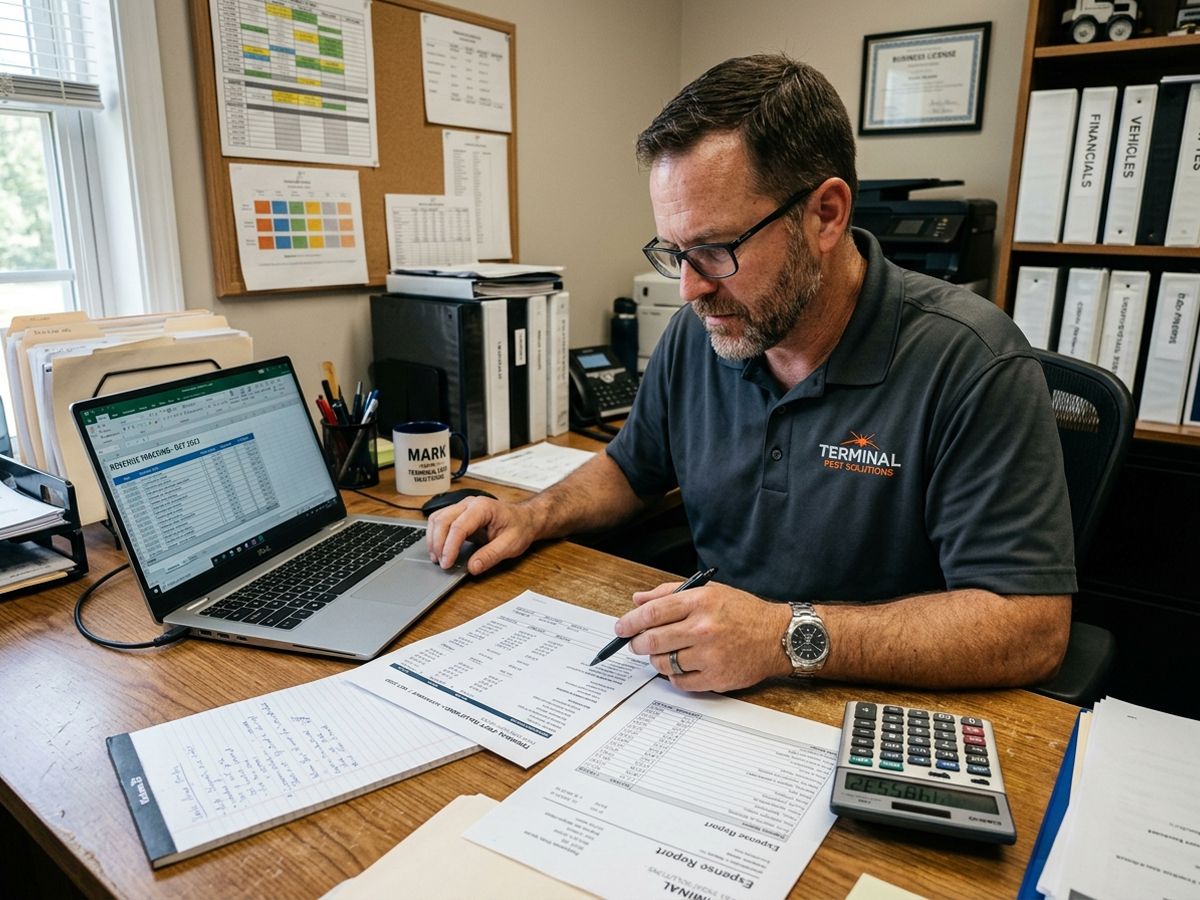
Profitability can be difficult to track in a pest control business, especially when revenue and expenses change throughout the year.
Fuel prices fluctuate. Chemical costs rise. Labor expenses increase. Without a clear system for tracking those numbers, it becomes harder to understand what’s helping or hurting your bottom line.
That’s where a pest control profit and loss statement can help.
A profit and loss (P&L) statement gives you a clear view of your revenue, operating costs, and profitability over time. Instead of relying on rough estimates or checking your bank balance, you can see how your business is really performing month after month.
Using a pest control profit and loss template also makes it easier to:
As your business grows, accurate financial visibility becomes even more important. Small cost increases or pricing issues can reduce your margins if they aren’t caught early.
To help simplify the process, we’ve created a free pest control profit and loss template. You can use it to organize and monitor your financial data.
Pest control companies are more profitable when they understand where their money is really going.
Revenue alone doesn’t tell the full story. You also need visibility into labor costs, materials, overhead, and recurring revenue trends. Without that, it’s difficult to understand what’s truly affecting your margins.
That’s why we created a free pest control profit and loss template.
This template can help you organize your costs, revenue, and metrics in one place.
Instead of piecing together numbers from multiple spreadsheets or systems, you can track profitability with a more consistent monthly view of your business.
It also helps you monitor operational trends over time. That includes things like technician labor costs, revenue per job, and overall profitability.
RELATED ARTICLE: The Quick Guide to Pest Control Invoices [Template]
A pest control profit and loss statement gives you a clear snapshot of how money is moving through your business.
At the most basic level, it tracks your revenue, expenses, and remaining net profit. But to get meaningful insights, you need to break those categories down further.
For example, recurring service revenue should be tracked separately from one-time jobs. Recurring customers create more predictable income. Specialty or seasonal services, on the other hand, can fluctuate throughout the year.
On the expense side, labor is usually one of the largest costs for pest control companies. Fuel, vehicle maintenance, chemicals, and materials can also have a major impact on profitability. Even more so as prices change over time.
Software costs matter too. Scheduling, invoicing, and reporting platforms certainly add expenses. But they can also improve efficiency and reduce administrative workload across the business.
The goal isn’t just to record numbers for tax season. It’s to understand:
When you consistently track those trends, it becomes much easier to make informed business decisions.
RELATED ARTICLE: 6 Ways to Reduce Fuel Costs for Your Pest Control Business
A profit and loss statement helps you understand whether your business is actually becoming more profitable over time.
Without clear tracking, it’s easy for rising costs or shrinking margins to go unnoticed. Revenue may look healthy on the surface while fuel, labor, or chemical expenses eat into profits behind the scenes.
A strong P&L statement helps you:
It also gives you more confidence when making business decisions.
For example, say labor costs continue rising while revenue per technician stays flat. That could mean it’s time to adjust your pricing or improve route efficiency.
Or if recurring revenue starts declining, you can catch the issue earlier before it affects long-term cash flow.
Also, because pest control is heavily tied to seasonality, monthly financial tracking becomes even more important.
Comparing trends throughout the year helps you prepare for slower periods. Plus, it helps you manage expenses more effectively and build more predictable revenue over time.
The goal isn’t just better bookkeeping. It’s better operational visibility into the health of your business.
Tracking profit and loss consistently helps pest control businesses spot problems earlier and make better operational decisions.
For example, chemical or fuel costs may suddenly increase. To stay profitable, you may need to adjust pricing or review vendor costs. Or you might notice your revenue per technician starts declining. That could point to route inefficiencies, overtime issues, or scheduling problems.
It’s also important to pay attention to recurring revenue trends. A drop in recurring services can affect long-term cash flow even if one-time revenue looks strong.
That’s why consistent monthly tracking is important. Over time, your P&L statement helps you identify:
Using a template simplifies the process.
All you have to do is enter your monthly numbers. Then, preset formulas automatically calculate revenue, expenses, margins, and profit trends. That’s less time you have to spend organizing spreadsheets and more time you can spend analyzing your business.
Strong financial tracking helps pest control businesses make smarter operational decisions.
When you clearly understand your revenue, expenses, and profit margins, it becomes easier to spot rising costs, adjust pricing, and improve long-term profitability.
And with the right tools, you don’t have to manage all of it manually.
Download our free pest control profit and loss template to organize your financial data, monitor profitability trends, and gain clearer visibility into your business performance.
RELATED ARTICLE: How to Improve Your Pest Control Invoice Process
Pest control companies should track all major operating expenses. This includes labor, fuel, chemicals, materials, insurance, software, marketing, and administrative costs.
Separating expenses by category makes it easier to see which costs are rising and what’s affecting profitability over time. That visibility can help you make better decisions around pricing, routing, staffing, and vendor management.
Profit margin measures how much revenue your business keeps after expenses are paid.
For many small pest control businesses, a net profit margin between 7% and 10% is considered healthy. Higher margins are often possible when companies improve route efficiency, control operational costs, and grow recurring revenue.
Margins can vary based on your service mix, labor costs, and local market conditions
Yes. Recurring revenue should always be tracked separately from one-time or seasonal services.
Recurring customers create more predictable monthly income and help stabilize cash flow throughout the year. Separating those numbers also makes it easier to identify long-term growth trends and customer retention patterns.
Yes. Pest control software can simplify financial reporting by connecting invoicing, scheduling, payments, and reporting tools in one system.
Instead of manually updating spreadsheets, you can track revenue, expenses, outstanding invoices, and profitability more efficiently. Many platforms also provide real-time reporting, which helps you monitor financial performance throughout the month instead of waiting until month-end.

Operational tax is the hidden cost of unnecessary work that builds as your pest...

Learn how to build a pest control referral program that consistently generates new business....

Put your business goals into action with our free pest control action plan template....